The Atticus of My Life

In the book of love’s own dreams
Where all the print is blood
Where all the pages are my days
And all my lights grow old
Attics of My Life, by Robert Hunter

THIS POST IS FULL OF SPOILERS:
If you hate spoilers and plan to read Go Set a Watchman, skip this post for now.
But please, come back when you’re done.

A piece of free advice:
If you have not read To Kill a Mockingbird recently, read it before you read
Go Set a Watchman. You’ll be glad you did.

I’m one of those peculiar people who take literature too seriously. I’ve never doubted the power of a good writer to create worlds that are as real as our own and, at the same time, to conjure reflections and echoes of a reality we haven’t quite earned yet.

Characters in books become as real to me as my friends and family, my banes and enemies. I grant that this is a sign of deficient mental health, but I hope I’m not the only one who, for example, bursts into tears when Gavroche Thénardier dies on the barricade or when Edgar Derby is executed for pocketing that damned teapot he found in the rubble. I guess most times for most people, characters remain on the page where they belong and don’t much interfere in our day to day. Lucky them?

But some characters escape the page and grow larger than life, become icons. Some, like Atticus Finch, become moral exemplars and redeemers of collective wrongdoing. And if there’s anything we can’t stand, it’s for someone to reveal the flawed man behind the myth.<fn>See also, Huxtable, Cliff.</fn>

So let’s cut to the chase. Atticus Finch is a standard issue Southern gentleman – a man I recognize well in several of my Deep South forbears – a genteel fellow of manners and decency who also happens to hold racist views that are extreme enough to make the daughter who once idolized her Perfect Father literally throw up when she discovers his true nature.

It’s easy to see why so many long-time Harper Lee fans are outraged.

In To Kill a Mockingbird, Lee created the Great White Father, the man of infinite patience, rectitude, and sense of fairness who could redeem our (White folks, that is) sense of guilt and discomfort over racial injustice. In Go Set a Watchman, she pulls the curtain back to reveal that Atticus, the Great and Powerful, is just another worn out, cranky uncle forwarding conspiracy emails and ranting about Those People.  Once again, hero worship turns out to be a sucker play.

At the end of Mockingbird, we were given permission to tut-tut the horror of Tom Robinson’s predicament and to feel joy at the progress we’ve made, pass the chicken please. The white trash Ewells excelled in the Judas role in this passion play, lowly creatures who took welfare and kept their kids out of school and couldn’t be bothered to shift for themselves. Our own hands were never dirtied like the coarse and common Ewells. They were the evil in our midst, and if only we better whites could follow the shining example of Atticus Finch, the world would be our Nirvana, and hallelujah, pass the gravy, if it’s not too much trouble.

Watchman‘s Chapter 17 is one of the most painful reading experiences I’ve ever suffered. Even knowing ahead of time that Lee was going to reveal a “dark side” of Atticus, I was unprepared for the casual, genteel, typically Southern bigotry coming out of his mouth. And Lee wrote this exchange with no wiggle room: Atticus is basically a disgusting racist. He laughs at Jean Louise’s arguments, he taunts her for her naivete.

There’s no turning away: the Great White Father is a son of a bitch. The revelation of Atticus’s repellent attitudes hits as hard as if a sequel to the gospels revealed that Jesus and Judas were the same character. Everything you know is wrong.

A few days before GSAW hit the stores, I re-read Mockingbird for the first time in years. I was surprised at the extent to which the movie depiction replaced the book itself in my memory.<fn>Like I said: re-read TKAM before you read GSAW.</fn> Mockingbird the movie revolves around the trial of Tom Robinson; everything else that happens travels in orbit around that event. In the book, the trial is critical, but the book as a whole explores the curve of small-town childhood in the South with fondness and wit. (White children, naturally.) As with so many movies/books/tv shows about race, actual black folks are pretty much in the margins.<fn>With the notable and long overdue exception of the movie Selma, though it too has its own issues of Great Father drama and hagiography.</fn> And this gets to one of the key problems with Mockingbird – on the one handit asks us to empathize with the ‘poor, poor Negro’, even while bestowing upon us a glimmering savior to make us all feel okay again. That nice (hell, impossibly perfect) Atticus washes our sins away.

While theories abound as to Watchman’s origin, I readily accept that this was an early shot at Lee’s Maycomb chronicle; after reading Watchman, Lee’s editor told her go back and tell the tale from Young Scout’s perspective. It took her two years to re-write, and the result was the structurally and stylistically superior Mockingbird. The Watchman version is clearly unfinished; it lacks the cohesion that extended editing and re-writing would have instilled.<fn>It is also unmistakably the work of Harper Lee. This is no hoax, and it sure as hell is not Capote.</fn> But I can also see how this might have become, later on, an effective sequel. In fact, it takes great effort to read this as anything other than a sequel or amplification of the original: the same characters, 15 years later on the fictional timeline, in a book published 50+ years later. It’s of a piece, and it provides an essential corrective element that turns the saga into something other than a happy fairy tale, albeit one where that poor Tom Robinson &c., pass the black eyed peas.

Mockingbird gave us a feel-good fantasy. Watchman fills in the blanks and gives us a truth that does not encourage happy mealtime discussion.

Mockingbird is still a great novel. Lee’s depictions of the rhythms and rhymes and smells of Southern life are as good as anybody else, Faulkner, O’Connor, Percy, you name your favorite. But Harper Lee is not a great novelist.<fn> For the same reason the John Kennedy Toole and Joseph Heller are not; the body of work is just not there to justify such a judgement.</fn> She spread a dusting of fiction over the people she knew growing up, the place she knew. She had a story worth telling, and perhaps even recognized that the time had come for white southerners to address race in a different way. But she had one good story, told it, and went silent. Wondering whether she could have become a great novelist is no better than a parlor game along the lines of could Wilt Chamberlain outplay Michael Jordan and such.

While Watchman is not a great novel by any stretch, it’s probably not fair to judge it too harshly given that it never even made it to galleys until its rediscovery. But it is an important piece of work for two key reasons. First off, it sheds light on the author’s struggle, the process of taking a work from idea to paper to woodshed to completion. This alone would make GSAW a worthy curiosity for literary scholars and a fun what-if exercise for Mockingbird devotees. But more important than this: Watchman uses the Freudian/Oedipal device of kill the father to allow Jean Louise to become an adult in her own right. And in so doing, Lee strips the mask from a false idol that has captivated her fans for several generations. And that shit comes with some heavy dues.

So first: The similarities between TKAM and GSAW are evident and plenty, with several paragraphs that describe Maycomb life appearing in both without so much as a comma’s difference. But the divergences are where we get a glimpse at the evolution of a book that has been read by millions of people over the past half century.

Famously, Tom Robinson is convicted and then killed trying to escape prison; everybody knows that. But in Watchman, the “trial” is dealt with in a paragraph or two, with the throwaway reference that Tom was acquitted.<fn>And a more disturbing suggestion that Atticus fought hard for Tom only to sustain the fiction of equality under the law. More later.</fn> In the retelling, the “trial” transformed from a mere trifle to the centerpiece of one of the nation’s great moral fables.

Then there’s the fiance in GSAW, Henry, who Jean Louise describes as her oldest and dearest friend, a boy who lived across the street at the same time the trial and the adventures with Jem and Dill and Boo played out. This character does not exist in Mockingbird. Perhaps even more revealing, Boo Radley does not exist in the Watchman universe, and there is no mention of Bob Ewell’s attack on Jem and Scout, the event that provides the bookend beginning/ending of the entire Mockingbird narrative.

And of course, there is Jean Louise’s discovery and outrage that the Father and her fiance are, if not card carriers, at the very least fellow travellers of the White Citizens Councils who made damned well and sure that Jim Crow remained the law of the land and kept Those People from getting above their station. Not to be outdone, Jean Louise reveals herself to be a states rights fanatic of the first degree, and declared herself angry and outraged that the Supreme Court would force people to do the right thing when they would certainly get around to it in their own good time and why are they rushing things so. Between the two of them, you have the complete package of racial oppression. And they’re both so damned reasonable about it.

The heart of Watchman‘s ultimate importance lies in that last disparity between what might be viewed as the canon of TKAM and the heresy of GSA, lies in Harper Lee’s forcing us to squarely face the myth of the Great Father, to see the truth of the complexity and the ugliness and duplicity, and to, well basically, grow the fuck up. Look, she says – you worshipped this False Idol, you used him to absolve your sins, and you’ve been a dupe the whole time. And by the way, your stand-in Scout ain’t all that either, what with her love of states rights and eventual acceptance of the way things are.<fn>To be sure, the ending of the book feels hurried and undeveloped, something I feel would have been addressed in re-write/editing. But Lee said publish it warts and all, so this is the text we have to unpack, to use a term that I hate but why not at this point, my god, the world is in tatters and the Great Father is dead. Cut me some slack.</fn>

Lee created the Perfect Father, the man who could resolve any argument, cure any scratch or scrape. And Gregory Peck made that character flesh. Go ahead, try to imagine any other actor of the past 100 years in that role. None of them will stick. One stupid internet poll after another has put Atticus near the top of the “perfect father” sweepstakes. People name their children after Atticus. He’s a goddamned monument.

And this is exactly where Watchman delivers the blow that makes it an important contribution to this corner of the literary world: Lee shows us that our Savior is a fraud, tells us to wake up and be adults in our own right. Lee shows us the essential error of putting our faith in mythical heroes and asks us to stand on our own. Sure, it’s tough when we discover that the pleasing fairy tales of our childhoods are fictions that cover up a more complex and disappointing set of truths. Step up and deal.

Watchman comes along at a particularly fraught moment in our 400 year struggle with the wages of America’s original sin. Any pretense to having arrived at a post-racial moment withers with the first serious investigation. No matter how “good” we whites think ourselves, no matter how much we congratulate ourselves on how far we’ve come<fn> Guilty as charged. Mea culpa.</fn> – the fact remains that we live in a segregated society, and it is primarily White America’s obligation to ensure that the structural changes necessary to allow this issue to reach resolution are squarely in our own laps. (Like it or not, Blacks have no obligation to make things better; we shit this bed and it’s ours to clean.) Unlike TKAM, Watchman does not offer any bromides to make that pill any less bitter. In fact, by making Atticus’ noble defense of Tom Robinson an act of expedience rather than principle, Lee drives home a disturbing and cynical point: good deeds may not quite be what they appear. Even your own, so stay awake and question, question, question.

Another heartbreaker in Watchman: Jean Louise pays a visit to Calpurnia, the Negro woman who essentially raised her and Jem. In TKAM, Calpurnia was for all intents the only Mother Jem and Scout knew. Now long since retired and removed from the White world, Calpurnia barely acknowledges Jean Louise, and certainly display no affection. Jean Louise is deeply hurt, but also outraged: how dare she not remember me, how dare she turn her back on how good we were to her, how we treated her as though she were just like family, etc. Jean Louise has not found the maturity to accept her own complicity in racial oppression. It’s too much for her to take. In this, she is the perfect representation of too many “enlightened” whites on the question of race, with our plaintive whines of “can’t they see how much we/I have done for them already?”, largely blind to the overwhelming privilege we claim as our birthright without even recognizing it even exists.

In the end, I find myself at this: despite the fact that Mockingbird is likely to remain the preferred version of Lee’s Maycomb tales, it is dishonest to ignore the details of Watchman in our overall view of what Maycomb means in its literary context. Memories are imperfect, and stories told over time shift and morph to reflect new experiences, changed attitudes, or something as simple as wish fulfillment. When Lee wrote Watchman, she told a story of a young woman’s disillusionment about her once revered father; when she rewrote the story from the young Scout perspective, she transformed Atticus into the perfect father, the perfect man.

This is not necessarily a contradiction. But the fuller portrait that emerges from the combined tellings – even though it is a real heartbreaker – brings us closer to an understanding that is probably more useful and true in the long run: we are none of us perfect – even/especially the people you’ve placed on a pedestal – and you can bet there’s a dark side to your own character that needs serious work, some whining cling to privilege that we mostly don’t even see. And there is no Great Father who can fix everything for us; it all depends on our own imperfect efforts. It is surely impossible to bear, to go on without our Great Father; but the alternative – giving up and throwing in the towel – is even worse.

I’m not sure Harper Lee intended anything of the sort. It may be that she truly felt the story delivered in Mockingbird is the “way it is”, and I’ve no doubt many will hold to that reading. But I’ll hold to this one: Harper Lee knew what was in the earlier manuscript, and she allowed its publication as a favor to us all. Watchman delivers a harsh but necessary message: Give up the fantasy and face the world as it is. Shit’s too damned serious for anything else.


The Longest Arc

It’s been a good week to be a liberal in America. The affirmation by the Supreme Court that the Affordable Care Act will be allowed to remain the law of the land, along with their upholding of Obama-era policies regarding housing discrimination, are big victories.

Even bigger: today the Supremes affirmed the right for everyone to get married. This is a huge stride forward. Obama is correct in saying that “We have made our union a little more perfect” with this decision. The Obergefell decision is one of the key social justice decisions SCOTUS has delivered, and today we saw momentous history in the making, as surely as Brown v Board of Education was sixty years ago.

This is all huge stuff, great stuff that helps me put aside my usual ‘glass is half empty, and would it kill you to add a little ice’ mindset.

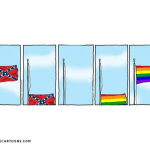
Also big this week: the Stars and Bars has become de facto radioactive to almost every public official and corporation. The rapidity of this has been stunning, albeit long overdue. Sure, it’s pretty evident that many of the pols speaking out against the Confederate battle flag are just playing a triangulation game, trimming their positions just in time.<fn>I’m looking at you, Nikki Haley.</fn> But in this case, having these folks play along with their “me too” duplicity is welcome. That battle rag has loomed over the South – and the Nation – for far too long. There will be predictable pockets of holdouts, a bunch of ‘fergit, hell!’ yahoos who refuse to give up their precious. But at last, there is rapidly growing agreement that the flag is a symbol of a shameful legacy of racial hatred. I’m more than okay with that.

But this change comes with a hefty price tag that belies the happening overnight feeling. It took nine more people dying at the hands of yet another wacko with a gun to get to this moment. It’s not too much to suggest that every step in the movement to repair our national shame surrounding racial inequality has carried similar costs, that carnage has been the necessary currency in the struggle to get white people to do something as basic as to recognize our shared humanity. But unlike, say, the Newtown massacre, this horror is actually leading to a significant, if insufficient, piece of social change.<fn>Gun control remains somehow too much to even consider, and it would not surprise if the NRA crowd was somehow fueling the anti-flag fever to divert attention away from the well-armed elephant in the room.</fn> But if this overdue disgrace of the battle rag is really just a step in the right direction, it is a gol-durned big un, especially in the states that still whistle Dixie a little too often.

I come from the South, from a family background that is typically conservative in the way the White South has pretty much always been, and that was not always let’s say flexible in our view of difference. It appears that ancestors fought on both sides of the Civil War, but mostly for the Confederacy. One ancestor was a prosperous slave holder in South Georgia.<fn>None of that wealth survived the war, and that side of the family scraped along after that.</fn> On the other side of the family, my great-grandfather was, among other things, a bootlegger in Mississippi who employed black men to help work the still, and who earned frequent uninvited visits from the local Klan who disapproved of this economic arrangement. Like most Southern families, the past is a muddle of strange happenings and inherent contradiction.

But either way, the elders of my experience were polite, white Southerners who would never dream of being overtly rude to a ‘Colored'<fn>Never a colored person, although occasionally perhaps a Nigra, which was the genteel substitute for that horrible word that I was taught from an early age was only used by White Trash.</fn>, but who were quite certain in their belief that black people were something other, and absolutely less than in some indefinable way.<fn>But who might also, through dint of hard work and diligence, elevate themselves above the aforementioned White Trash. The granular slicing of social strata was elaborate. The point was to always have some group that was lower than your own.</fn>

And so it came to pass somehow that at a tender young age, when we lived in the Tennessee tri-city area, I was given a small Stars and Bars of my own.<fn>I cannot remember who gave it to me, other than that it was a relative, not my parents.</fn> It was not very large, and cheaply made, with staples holding it to a dowel that served as an ersatz flagpole. Nobody explained anything about it, other than that it was “the Southern flag”. I hung it my room and really didn’t think much about it.

And then we moved to southern Connecticut, where I unpacked my stuff and hung it in my room. I still had no concept of what it meant. And it came to pass that I made friends in the neighborhood who were more overtly racist than anybody I’d known in the South. Not necessarily more racist, but they lacked the gentility to say Nigra, preferring that other word that gets readers of Huck Finn so riled up these days. And so, like anybody wanting to fit in, I started using it, too.

In the north, I attended an elementary school that was pretty much all-white, with the exception of the son of the caretaker of our church. Willie and I became pretty good friends. You’d think this cognitive dissonance of having a chosen friend, who was Black, and a bunch of racist neighborhood friends, would provide a sharp spur of conscience in a young boy. No such luck.

One day, Willie visited my house. I’m not sure if he saw the flag or not. It really didn’t occur to me that it might make a difference. But we somehow got into an argument, and I ended up getting mad and dropping the N-bomb on him. He punched me in the gut so hard I dropped to the ground. And he left to walk home, not even asking for a ride or the phone to call his mom.

And we never spoke again.

Make no mistake. I knew I was crossing a line when I said it, and I knew that it was fucked up to do so. But I felt I had it in my power to knock this really nice friend down to size, just because he made me mad about something. But he was having none of that.

I was around 10 years old at the time. The shame of what I did that day still burns. It’s the most overtly racist act of my life, and that word has not passed my lips since. But I can’t claim innocence of more subtle racist behaviors, like getting nervous when a group of black males gets on an empty subway car with me, or even just not considering that a great scientific advance might have been realized by a Black man or woman, or of being surprised when I met a Black man who loves 80s hair metal bands. Because that’s not what they do, right?

I was not raised by bad or malevolent people. I was not taught to be racist, at least not in any obvious sense. But I did live in a world where hanging the battle rag was fine, where assuming the racial superiority was the order of things, where laughing and joining the guys in crude racial jokes was no problem. I thought I was not a bad or malevolent person. But by every reasonable measure of the word, I was a racist. And I somehow managed to get that those two statements could not live together.

I’m not sure when I decided to change, not clear on exactly when I quietly took that toy battle flag and threw it in the trash. I’m not sure when I actually realized that I could work to be rid of the burden of lies that led me to assume my superiority based on my pale skin. I’ve struggled with that for over 40 years, I guess, but even though I like to congratulate myself on how far I’ve come, that stain is still there. Just like that stain is indelible on our Nation. If I treat every person I meet, from now until I die, with full dignity and respect – doubtful, but it’s a goal – the stain will remain.

Getting rid of the battle rag is not going to change much in the overall calculus of how racial “difference” plays out day to day. But like the day I threw mine in the trash, it can represent a decision to make conscious choices about the messages we endorse and about how we wish to be, even while we are never going to be able to fully attain that goal. For most whites in my generation, the stain is pronounced. For later generations, for people who do not grow up with the message that a symbol that represents slavery and segregation and racial animus is approved by their governments and institutions, maybe that stain begins to fade.

And even though the shame of how I behaved remains, I am not ashamed of being from the South. Many of the better examples of American culture come from the South. The music I love, the food, the literature, the seemingly genetic predisposition to gothic humor…this is the bounty of Southern heritage. The Civil Rights movement started in the South and rippled out across the country to force people in other regions to grapple with the institutional racism as it manifested in those places. There’s plenty to be proud of. This is the heritage – shared across race and class lines – that we can celebrate. And we can do it just fine without that miserable battle rag.


In Defense of Shame

I come here not to bury shame, but to praise it. Sort of.

There has been a surge in the media about the damaging impact of shame on our individual psyches. In general, these are pretty much outstanding discussions about how we internalize shame and allow it to debilitate our lives in ways subtle and not-so. In particular, I recommend this talk by Dr Brene Brown:

Dr Brown’s talk, and her fine book Daring Greatly, have been very useful in my recent evolution into whatever it is that I am about to be becoming. I’m not a big fan of the self-help genre, but I am glad I read this one. She’s funny and she has some humane advice for people who are susceptible to shame.<fn>Most of us, really. Just not the ones who should be. See below.</fn>

Right along these lines we’ve seen a recent TedTalk from Monica Lewinsky, and while it is not as essential as Brown’s talk, it is a pretty gutsy appearance from a woman who was put into the stocks in the public square on a scale that is still hard to understand.<fn>That she was not crushed to dust by that horrific ordeal is really hard to believe. Respect!</fn> In So Youve Been Publicly Shamedwriter Jon Ronson relates episode after episode of gang-shaming to illustrate the ways public shaming via social- and traditional-media has become a slithering beast that titillates and thrills the pitchforked mob as it consumes and spirits away everything in its path.

what rough beast, its hour come round at last, slouches towards Bethlehem to be born?

And I am in pretty solid agreement with these folks. Shame and shaming are powerful weapons, especially when turned on the basically powerless – children and teens, especially, but human beings generally. And as Lewinsky notes, it has devolved into a sort of blood sport that treats its targets as disposable widgets that exist outside of a human frame. It is random, cruel, and serves no real purpose, unless one considers the development of smug superiority a purpose.

But I have to admit to longing for a time when shame was a useful check on more egregious human behaviors. Now surely, I do not accept that a young man exploring his sexuality in the privacy of his dorm room is a worthy target, any more than is the careless Tweeter who is so-to-say exhibiting his/her ass through imbecilic tweets deserving ruination for what amounts to minor stupidity. Nor does a child deserve to be humiliated to ensure a change in behavior, an all too prevalent mode of adulting, one that is probably just as damaging as being quick with the belt.<fn>My first day of school in a new town, we arrived 3 days after classes began. One teacher, when I handed her my forms, snarled, “Class started 3 days ago and you’re late. Aren’t you ashamed?” I literally could not look at that beast for the entire school year. You bet I was ashamed, but I had no idea why. The shame should have belonged to her.</fn>

So true, a lot of the instances of shaming and humiliation amount to nothing better than blood sport, a distillation of the paparazzi-hounding that celebrities must endure. And it is a favorite tool of deflection among those who feel shame but wish it to belong to someone else.<fn>Let us consider the careers of the modern-day Savonarolas like Swaggart and Haggard and Westwood Baptist.</fn> Surely, we would be better off as a society if we could all just leave each other the fuck alone, or at least mind our own damned business. Most of what we are induced to pay attention to has absolutely nothing to do with us. Look away, fercryinoutloud.

But as rampant as this kind of shaming has become, we have lost shaming as a tool in the realm where it could really make a difference.

Some years back, a pal and I were philosophizing about the havoc St Ronaldus Maximus had wreaked upon our land. At one point, we came upon this damning formulation:

Reagan erased shame from our public vocabulary.

Rick Perlstein’s book The Invisible Bridge: The Fall of Nixon and the Rise of Reagan presented this idea in a different form:

…all that turbulence in the 1960s and 70s had given the nation a chance to finally reflect critically on its power, to shed its arrogance, to become a more humble and better citizen of the world – to grow up – but Reagn’s rise nipped that imperative in the bud…Then along came Ronald Reagan, encouraging citizens to think like children…”

This was amply demonstrated in the reaction to the movie Wall Street; when Gordon Gekko declares that “Greed is good!”, too many viewers mistook his character as the hero of the morality play, with Bud Fox seen as the schmuko loser for having some shred of human decency.<fn>A similar mis-reading came with the more recent Wolf of Wall Street, wherein the lunatic behavior of the main characters was received as some kind of model for emulation.</fn> Up until the Reagan raj, greed and excessive consumption were generally agreed to be shameful, poor behavior. No more: Lifestyles of the Rich and Famous should have set the tumbrels rolling and the pitchforks aloft. Its impact was the opposite – the repugnant people wallowing in their tacky excess became heroes. Did they deserve shaming for being rich? Hell no. But their tasteless and thoughtless exhibitionism certainly earned them the kind of revulsion one might feel for public masturbators or pet-torturers. Instead, what we saw was the elimination of shame as a response to shame-worthy behavior. Even those rapacious bastards Rockefeller, Carnegie, &c. had the wit to recognize that they had to offer philanthropic gestures to counterbalance their shameful behavior.

Why, asks the frustrated reader, is this worthy of 1000+ words at this particular moment in time? What spurs this unhinged diatribe?

Two words: Judith Fucking Miller.<fn>One of those words is a bonus.</fn>

Of late, this war cheerleader and proven fabricator has been making the rounds to promote her book, and is being treated on the electric picture radio machine as a reputable person who deserves respect. Yet she offers no apology for her part in the fraudulent sale of a war that claimed over 100,000 lives.

She has no shame. She should. She should wear sack-cloth and crawl on her knees cleaning bedpans at Walter Reed until her last breath. Instead, she is collecting checks.

Is Bill Kristol (to name yet another keyboard kommando) ashamed of being absolutely wrong on every major question while cheerleading other people’s children to war? This mendacious hack isn’t even worthy to clean the bedpans.

Are any of the architects of war ashamed? Are the Masters of the Universe, those geniuses of financial innovation who drove the economy into a ditch, ashamed?

Does Henry Kissinger feel shame?

Rumsfeld? Cheney?

Not so much. No matter how wrong or damaging these people have been, they never seem to have to pay for their track record. I mean, Jesus H Christ bearing false witness, what does it take for someone like that to be shunned, to be told firmly to please shut up and go away? I’m not asking for ritual seppaku – though I would not be opposed – but some sense of decency and remorse would be a good start.

Is the inability to feel shame a perfect definition of sociopathy?

OK, wise guy pointy headed liberal writer – who decides whether something or someone is shame-worthy?

Ah, the judgement call. And aye, there’s the rub. And it may be that any usefulness that shame once had is now gone, frittered away on our reflexive addiction to piling on whenever a Kardashian or a sportscaster or an athlete acts the public (or semi-private) tool. And our cultural tendency to focus on the trivial<fn>e.g., Jameis Winston’s asinine public performance of “fuck her right in the pussy”, which remains the only act that has earned him any disciplinary action</fn> renders shame that much less useful in cases where it is called for. Because if the tool we use to shame Kelly Clarkson for having the gall-durned nerve to appear in public before losing her baby weight is also the best we can do when a monster like John Bolton<fn>Yeah, this miserable fuckwit.revoltin_bolton </fn> can’t shut his goddam piehole no matter how many times he’s proved wrong, well, I’m not sure that opprobrium has any heft anymore.

I’ll give this much to Nixon – I believe he knew that his misdeeds were shameful, and knew it so well that it drove him to even more misdeeds to hide the first ones. Reagan and his gang were just the opposite: they replied with a wink and a nod, letting us all know that shame was no longer a reasonable response. You take what you want, do what you want, and never, never apologize.

I mean, really…some people just have no shame.

A despicable human being and an animal that inspires awe, even in death.
A vicious monster alongside a noble beast that inspires awe, even in death.

This wretched woman has been subject to a flood of online shaming. Does she deserve it? I say absolutely. Is it making any difference? Probably not. She’ll be out gunning down more creatures soon, no doubt, and Ricky Gervais is racking up the hit counts.

Still, I defend the potential utility of shame. Properly recognized, it should serve us all as a guide in our personal decisions and behavior. I agree<fn>Hell, I know too well</fn> that shame can become a distorting force that can cripple a person. But still, the old adage of ‘never do anything you wouldn’t want your Mother to see you do’ certainly has shame at its core. But that’s not necessarily so wrong.<fn>If you grew up under a Mommie Dearest scenario, my apologies. But there must be someone, living or dead, whose admiration you value. Let that person/entity be your invisible observer.</fn>

Maybe shame is just for the little people now? Or maybe it’s just another form of entertainment, the precursor to and inevitable outgrowth of reality teevee. If that’s it, we’re all the lesser for it.

PS – This is a great book that explores the notion of shame far better than I do, but in a different cultural context.

Read this.
Read this.


Breaking: Water is Still Wet

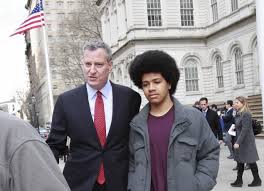
Late last year, the NY Police were very, very cross with their new Mayor, who had the gall to mention that he had instructed his son to be very careful and respectful if he had any encounters with the police. Here’s a picture of the mayor and his son.

deblasio

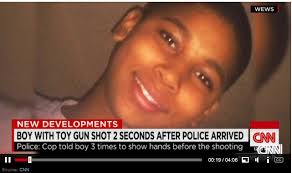
What possible reason could da mayor have had for saying such a thing?

garner tamir

(Excuse my insolence. I forgot we live in the post-racial America now.)

In response, the police union announced a virtual work stoppage during which they would not issue citations or make arrests “unless absolutely necessary”. Arrests fell by 66%, parking citations by 94%, and traffic tickets by 94%, according to the NY Post. My favorite stat:

“Summonses for low-level offenses like public drinking and urination also plunged 94 percent—from 4,831 to 300.

Of course, everyone remembers all the headlines about how NYC became a flame-engulfed hellscape in which drunken parking scofflaws urinated all over unsuspecting touristas. Snake Pliskin himself would have fled in horror, amirite?

Alas, no.

There was no surge in crime. The city went on as before. It turns out all that hyper-vigilant enforcement activity was not the only thing standing between Gotham and Somali-esque chaos. It turns out that most of the police work was not, to borrow from the union’s statement, “absolutely necessary”. Who knew?

The ‘broken windows’ policing philosophy that became (in)famous under NYPD in the 80s-90s became a tool for harrassment of minorities and other “suspicious” characters. In tandem with the lunatic war on drugs frenzy, this was really nothing more than a cudgel to keep Those PeopleTM in line. Stop-and-frisk statistics clearly demonstrate the disproportionate burden imposed on minorities through its practice. Even after research demonstrated that the tactic had little real effect on wider crime rates, most police forces insisted that this was the only way to keep the streets safe for our law-abiding citizens.<fn>Who, it turns out, are bad for budget solvency!</fn> But America loves it some authoritarianism, and so long as the burden is borne by Those PeopleTM, Johnny Law had no reason to change.<fn>FWIW, I have little patience with the smart-ass ‘No cops? No crime!’ tautology of the gLibertarian crowd. Many – maybe even most – police officers are decent people trying to do a difficult, often dangerous. Though statistically speaking, the chance of death or injury on the job is greater for about two dozen other careers, e.g. fishing, logging, or collecting trash.</fn>

Last week, our local fishwrap reported that the Leon County budget is facing a million dollar hole “because of a decline in the number of traffic tickets being written by the Tallahassee Police Department over the past 18 months.” Shortly after TPD settled an excessive force lawsuit <fn>Half a million bucks, taxpayers!</fn>, the chief of police “… went to the patrol division and instructed officers to continue writing traffic citations for serious offenses, but gave them the option and encouraged discretion in issuing warnings for stops for minor offenses.”

The article goes on to talk about TPD shifting it’s emphasis to a law-enforcement model that encourages engagement over confrontation. A TPD spokesman offered this:

“Our policing in Tallahassee has changed. In the past we may have been doing a traffic stop, and immediately the idea would be to write as many tickets as would warrant. Now the process is more of an education over enforcement at times.”

The result? TPD wrote fewer than half the number of tickets compared to the prior year. That number had been pretty steady for years. Perhaps some of that hard-core Barney Fifeing was not “absolutely necessary”? Maybe that instinct to “write as many tickets as would warrant” led to some, oh, let’s call it overly creative police work.

The news that the city government in Ferguson, MO, viewed its citizenry as little more than a dusky-hued ATM has spread far and wide.<fn>As long as far and wide does not include that place where certain friends and relations think everything would be fine of Those PeopleTM would just simmer down a little and know their place.</fn> Ta-Nehisi Coates provides a rundown on the situation in The Atlantic, and there is really little I can add to his excellent work.<fn>Why this guy does not have a twice-weekly slot on the NYT editorial page is an ongoing mystery.</fn> Notably, the federal DOJ reported that the department held contests to see who could write the most tickets for a single offense<fn>Merely a motivational tool to ensure greater public safety, no doubt.</fn> and that the city manager actively encouraged the police to step up citations when revenue began to lag. Suffice to say that there has been an ongoing and conscious effort to balance the city budget on the backs of the (mostly) Black citizens who can least afford it.<fn>That the collection agency is the predominately white police force is certainly just an unfortunate coincidence that makes this situation appear racial despite the fact that we have arrived at an utterly color-blind and post-racial period of harmony and unicorns. Pardon my insolence.</fn>

(By the way, I am not accusing Tallahassee police of this same racially-structured revenue enhancement, but I am curious to see the statistics one way or the other. However that turns out, I have not noticed our little burg devolving into any sort of Mad Max-ish dystopia in the absence of hyper-vigilant policing.)

I’m no public policy expert, but it seems pretty clear that if eliminating “unnecessary” citations and fines creates a hole in the budget, that money is going to have to come from some other source. <fn>But that leads us to the word that must never be spoken: taxes. Yet another legacy of St Ronald the Dim: we can have everything we want without paying taxes. It’s magic!</fn> “Enhancing” revenues through law enforcement is just another creative means of making up the shortfall that was, at one time, borne by the community as a whole. It essentially makes criminal activity a necessary component of a healthy city budget.

What would happen if, miraculously, our entire population became perfectly docile, law abiding citizens, as in Singapore, where the idea of a stray gum wrapper or jaywalking is unthinkable? If we are relying upon revenue from citations to balance the budget, we would have two choices: raise revenues some other way or create criminal activity where we can impose fines. (Are we headed to a day when people who do not commit infractions are labeled “takers” because they refuse to pay their fair share; at that point, the police will be viewed as “makers”.<fn>I kid! Such Randroid stupidity could never happen here.</fn>) Couple this impulse with the distortion already created by militarizing the police and inculcating an occupation force mindset<fn>cf. occupation</fn> – alongside the budget-balancing incentive to confiscate property under drug laws run amok – and the inevitability of our descent into police state-ism is apparent.<fn>Has that ship sailed? Is it too late?</fn>

Back to our local budgetary shortfall and the role of (not-enough) traffic fines in funding the local government. I happen to really like my current hometown. The services the city and county provide are generally efficient and enlightened.<fn>After enduring the incompetence of ATL’s city governance for years, our local gummit is a marvel.</fn> I know this kind of service doesn’t come cheap. But if we are relying upon illegal activity (or at least the citation of same) to fund our community, we are doomed.

I grant our local PD, and our new Police Chief, this: they recognize the problem and are taking some steps to move away from this kind of zero-tolerance policing.

“Our officers are spending less and less time doing what we would call proactive policing. They are doing more of the answering calls for service.”

There’s some radical thinking. Maybe a slogan to reflect this new emphasis. Hey, I got it. How about “To Protect and Serve”?

Nah, that will never catch on. Too hard to monetize.