This piece was scheduled to run on Earth Day at the Salvation South website. Unfortunately, publication there is suspended for the time being due to an injury suffered by founder/editor Chuck Reese. We hope to resume publication there very soon. In the meantime, this Earth Day piece was in danger of aging out, so I wanted to share in hopes that y’all will check out these worthy recordings. Thanks for your support here and at Salvation South. – rr-k
Every year on April 22, millions of people around the world (some claim more than a billion) pay tribute to our Big Blue Marble by celebrating Earth Day. 2022 marks 52 years of this tradition in the United States and 32 years internationally. Earth Day is ostensibly about “saving the planet,” though it might be more accurate to say it is about ensuring that the planet remains a viable place for human existence; the planet has survived more than a few extinction level events and endured just fine. As for us? The jury is out.
To be brutally honest, Earth Day has long since been co-opted as a marketing gambit by many of the more egregious violators of the planet’s overall health.
EARTH DAY! BROUGHT TO YOU BY GE! WE BRING GOOD THINGS TO LIFE!
BUY A SUBARU AND WE WILL PLANT A TREE!
NEW FOR EARTH DAY! ECO-FRIENDLY BABY SEAL SKINS! 100% ORGANIC!
In the meantime, as we struggle to mitigate the cycle of consumption/pollution – and reconcile the brutal contradictions and deceptions inherent in the corporatization of this once ‘innocent’ observance – here are three new albums spurred by the artists’ concern for our fate.
I won’t pretend that recording, or listening to, a set of music driven by this noble impulse accomplishes much in pushing back against environmental disaster, any more than corporate appeals to “save the planet” by buying more crap with a spiffy eco-label does. On the other hand, all an artist can do is what an artist does: Induce us to pay attention to something that means enough to spur them to create. We share our divine spark as best we can. In this case, we are asked to consider our place in the ecosphere while we listen to truly wonderful music.
So give these recent releases a listen. Then get out there and pick up some litter or plant a tree. Doing something is more useful than just throwing up our hands, no matter how tempting that path might be.
Hurricane Clarice – Allison de Groot and Tatiana Hargreaves, Free Dirt Records
For Allison de Groot (banjo) and Tatiana Hargreaves (fiddle), the follow-up to their eponymous debut album on Free Dirt Records confirms their reputation as two of the hottest talents in the stringband/bluegrass realm. Their archival exploration runs deep, their chops are kind of dizzying, and their charming harmonies bring to mind the best of the Carter Family.
On Hurricane Clarice, De Groot and Hargreaves created what they call “an ode to family as a source of hope in a time of dying.” Recorded in Portland, Oregon, during the savage heat wave of summer 2021 – temps ran 40-50* above normal for nearly a month, with an estimated 1400 deaths – they dug into the dusty archives, penned a tune apiece, and interspersed recordings of their grandmothers to outline a vision of kin, community, and respect for our shared histories that might be all that stands between us and oblivion.
This album is getting a ton or repeat play here at i2bHQ. Don’t sleep on this one.
Only The Killer Would Know – Valorie Miller, Blackbird Record Label / Indie AM Gold
Asheville-based singer-songwriter Miller’s latest is a nightmare tale of paradise gone bad. Years back, she moved onto a beautiful property near Swannanoa, North Carolina. Perfect, right?
“The very first night that I stayed alone in the trailer, on that little acre, I had a dream that the earth was a very thin layer of dirt on top of a giant trash pile and that the trash was sentient. It knew I was there, and it was evil. The next day, I woke up and I was like, ‘Something is weird about this place. Something is bad.’”
It was bad, alright. Turns out her little slice of heaven had been a dumping site for the weaponry and explosives company Chemtronics. Years earlier the corporation “restored the land” and moved on. It took years before Miller discovered that her ongoing health issues were caused by living atop detritus from our military-industrial complex. On Only the Killer Would Know, Miller tells a tale of paradise lost squandered through tunes like “Apocalachia,” “Your Own Well,” and “Home of the Brave,” where she sings:
“Here in the mountains so green, it’s deceiving You’d almost believe it’s a Garden of Eden Somebody sold you thoughts that you’re thinking And left a trace in the water you’re drinking.”
Yet for someone so clearly and deservedly pissed off, the album is raw and heartfelt and achingly lovely; this is no banshee rant. Imagine Lucinda if she’d come from the hollers instead of being born by the bayou and you get an idea of Miller’s sound. A damn fine listen and completely infuriating.
FIVE MINUTES for Earth – Yolanda Kondonassis, Azica Records
Oklahoman* Yolanda Kondonassis is one of the world’s most celebrated harp players. (No, not the harmonica; that big stringed thingy that angels play.) With FIVE MINUTES for Earth, Kondonassis delivers perhaps the most beautiful set of music I’ve heard this year.
Kondonassis writes that she experiences “the harp [as] a strong metaphorical protagonist in the story of Earth: majestic but fragile, feminine yet fiercely powerful, and strikingly diverse.” She challenged fifteen contemporary composers to write new works of around five minutes each inspired by the planet’s atmospheric or environmental condition.
The resulting 75 minutes of music ranges from dreamy and gentle (“Kohola Sings,” Takuma Ito’s ode to the humpback whale); to mildly disconcerting (“inconvenient wounds,” Reena Esmail’s imagining of the moment a glacier cracks open); to the ominous and mind-bending (Stephen Hartke’s “Fault Line”). Even at its most tragic moments, the harp is inherently beautiful, and the mood from start to finish is Shimmer.
FIVE MINUTES is a project under the umbrella of Kondonassis’s non-profit Earth at Heart initiative. All proceeds from this album and any future performance of the compositions will go toward funding environmental action.
* According to the United States Census Bureau, Oklahoma is a Southern State. There are also some huge historical reasons for considering it part of the South. More on that another day.
Perfect Flat
I dropped a new article on Salvation South yesterday about guitarist Shane Parish, a talented and committed artist who is carving a unique musical path for himself. His determination to follow his own instincts and put in the considerable work required to realize his vision is inspiring, not least because the overwhelming directive of our late-capitalist society is to conform, follow, and obey.
I love to explore and write about artists who turn their backs on this directive for two big reasons: 1) They are inherently interesting and instructive, and 2) Their very existence is sand in the machinery of those who wish us to conform/follow/obey.
There is a saying in Japan: “The nail that sticks up must get hammered down.”
It refers to the so-called perfect homogeneity of Japanese culture, but like so many pithy turns of phrase, it belies a more complex reality: under the shiny flat surface, Japanese culture is a roiling cauldron of cultural variety as reflected in its fashion and tastes in music, movies, and so on.
Still, that illusion of an unblemished ethnic and cultural gloss often elicits wistful sighs of envy from Americans who wish we could be more like that.
In my own imposition of oversimplification on a spaghetti-ball topic, I’ll split that group into two categories: Those Who Want Everything to Stay the Way it Supposedly Used To Be and Those Who Strive For An Easier Target Market That Will Buy More Useless Shit.
Let’s call them the UsedToBesTM and the UselessShittersTM.
Note: These terms are of my own invention and original work and thus subject to all trademark and copyright protections. (As if anyone would steal them.)
The first group demands the flatness and is more than willing to impose the leveling by coercion if need be. The second group is more subtle, striving for a high sheen of uniformity via seduction and temptation. This segment urges us to relax, enjoy, consume, all the while subtly ratcheting up the dread of perhaps losing the precarious toehold on ‘prosperity’ we imagine we enjoy.
There is a third group, too. Read to the end to discover the seven weird tricks this groups etc……
Together, these three groups serve to impose what I call The Great Flattening.
The UsedToBes
Let’s start with the old times are not forgotten revanchists who pine for an imaginary past where America was Great, men were men, women were housewives, perverts stayed in the closet, and knew their place, dammit. The people who say, “this is how we’ve always done it” and “if it was good enough for my Daddy and Grandaddy then it’s good enough for me” or phone up the police when Those PeopleTM s disturb the peace by acting all equal and human.
This is the motivating force behind the current crusade against the disturbers of a nice, quiet, decent society: the LBGTQ community who just refuse to act normal; those uppity people of color who demand to be treated as human; or those soft-on-crime coddlers who dare suggest that the billions spent on policing might be better invested in more humanitarian directions. You know. The dreaded ‘woke’ brigade.
These are the people who have their panties in a twist over teaching CRT, a legal theory that most people could not explain under threat of torture. CRT is a useful-if-incomplete explainer of how the world works and has rarely been mentioned outside a law school classroom until a culture war conman fabricated a social media firestorm suggesting that CRT was teaching tender little white kids to hate themselves. The grifter specifically tweeted ahead of time that he was going to do this, but the low-information rubes in the Fox bubble swallowed hook, line, and dog whistle.
And if you don’t agree, refuse to comply, you will be ostracized. Hounded, subject to the limits of the law. Often, refused the opportunity to earn a living.
Like Moe in the Three Stooges, the bullies of MAGAworld are threatened by non-conformity because deep down they know they are the ones who are deformed; any expression of freedom reminds them that they are the true cowards, afraid to engage the world and their fellow citizens with compassion and creativity. And like bullies everywhere, any serious pushback draws plaintive cries of victimization and efforts to demonize their perceived enemies, like those evil cabals of teachers. They hope to win by convincing everyone that if you do not fit their conception of what is acceptable you are to be cast out. And if they can’t win by intimidation, the violence is never far behind.
MoeRon (photo wixardry by barry stock)
Seriously, name a more perfect distillation of Moe Howard in today’s public arena than Ron DeSantis, a none-too-bright bully suffused with barely concealed terror, anger, and ignorance, and all too anxious to unleash state violence to ensure compliance.
The pile-on has become especially acute this year as several state legislatures are rushing to criminalize discussing specific topics – or placing reading materials on the library shelves where tender minds might be sullied – as though such a move will wrench the clock back 5060 70 years. Bundled under a banner of “parental rights,” the impulse here is to keep those dastardly teachers and librarians from indoctrinating their little angels with lies and filth. Things like accurate histories about slavery and the true origins of America the Great, or information that lets kids who are different understand that they are not alone, not defective, not disgusting just because they experience their sexuality in a way not in line with Mister and Missus Cleaver. I could go on. (Boy, could I.) But I’ll leave it with this: several state legislatures, in their rush to criminalize abortion or sexual transition therapies, have added provisions that would make these services a crime not only in their own state, but would charge any person who leaves the state to obtain these services with a felony. Shades of the Fugitive Slave Act.
The silver lining in all this is that the greater the pressure to conform, the greater the likelihood of a backlash. The advance guard is already on the march. Their success depends upon the support and participation of anyone who is appalled by the bullying, but has never been one to act out and makes waves.
Make waves, people. Disrupt the smooth surface.
The UselessShitters
Not quite as overtly oppressive as the UsedToBe gang, the UselessShitters are every bit as opposed to individuality as the UTBs. And this is the crowd that wants the majority to remain quiescent in the face of Moe’s bullying. Not because they agree with Moe, but rather because they are afraid Moe might turn on their happy little nook of the world.
We could call this gaggle of go-along to get along trimmers Larry to the UTB’s Moe. But I find UselessShitters more apt.
Their aim: To constrain the range of choices we consider possible and desirable. The better to sell us products that are easy to manufacture cheaply and in bulk.
Despite claims that capitalism encourages a wide variety of choices in a vibrant marketplace, we are in fact offered pitifully narrow options for consumption. Consolidation in nearly every economic sector offers the illusion of choices – WOW! Look how many sodas/beers/toothpastes there are to choose from! – while in fact we have only a handful of large corporations offering us infinite and minimal variations (Lite! Dry! Crunchy! Extra Crunchy! Minty! Diet! Zero!) on a theme.
The UselessShitters feed our longing for equilibrium and plentiful variety. That satisfaction demands, however, that we do not examine the situation too closely. In this realm, The Great Flattening serves to create a critical mass of docile and reliable consumers, well-conditioned lab rats eager to press the lever for another pellet of useless shit.
Mass entertainments like the Marvel Cinematic Universe are a huge force in the flattening. Insipid and poorly written melodramas papered over with hyper-expensive CGI wizardry, these epics convey all the emotional depth and feeling of a 1930s Western serial reel, with a largely unchanged undercurrent of good/evil conflict that, in the end, reassures us in our flatness. The proceedings are turbo-charged to disguise the hole at the center.
The basic plots and paper-thin characters are almost always retreads of something you have seen before, a salutary attribute that massages our infantile yearning for equilibrium and familiarity. If it weren’t for the visual whizbang and high-decibel audio effects, most viewers would fall asleep as quickly as if they were watching a Hallmark or Lifetime product. (To name yet another realm of “content” with all the heft of a potato chip.)
Everything in this realm is product, or its cousin in UselessShittery, content. You are meant to buy, consume, and forget all about it to empty a space for the next product. And the product comes in only a few colors, though they are described as though there is infinite variation at hand. But not too much variation! There is more profit to be made in reproduction of existing product than there is in something threateningly innovative.
This is true across all media. Corporate news wants you amped up so you will tune in or click through, but once you’re there you are unlikely to learn anything useful about whatever crisis-du-jour is on offer. (And if there is no actual crisis, don’t worry; they will make one up. Invasive spiders, anyone?) Worse, what you find will more likely reinforce your conditioned sense of helplessness, a why bother defeatism that makes the next episode of Dancing With The Stars so tempting, accompanied by a bag of whatever-flavored Dorito you have at hand.
And by next week there will be another breaking story to fill your void, last week’s spiders replaced by this week’s ZOMG THE SKY IS FALLING product. COVID is a fine example of how we generally prefer our crises to come with a short shelf life. (Goddamit, I want my resolution served up by the top of the hour!) I expect Ukraine fatigue to settle in any time.
Here’s where the third group comes in. And that group is us. All of us. The possibilities for our commonwealth lies in how each of us responds to the blandishments of Moe and Larry.
As to the transparent and cynical manipulations of Moe, it’s pretty simple. Say no. Say fuck no. Vote and organize and march. Do everything and more to stop these marauding bastards from making America over into the image and likeness of their imaginary nostalgia.
As to the blandishments of the UselessShitters, things are less potentially violent, but no less difficult for that. We – all of us and mea culpa by damn – are susceptible to the little temptations. And those acceptances lead to larger ones, and so on. Once ensconced in the comfort zone, it becomes harder to object, to say no.
Sure, we all want a little dumb downtime here and there, and there is something to be said – though not much, and almost nothing, good – about the relative charms of The Bachelor or Big Bang Theory or Big Times sports or reruns of Cheers/Friends/Joanie Loves Chachi. I mean, I love ice cream, but if that were all I ever ate…well, fill in the rest.
The deeper problem with succumbing to the temptations of the Flattening, with its limbic appeals to not think too hard, is that it leaves us utterly helpless against the campaigns of the UsedToBes. We grow comfortable in our constrained range of comforts and fearful that we might lose what meager buffer we have managed to erect between us and a world whose ‘harsh reality’ is intentionally exaggerated to keep us flat.
Sure, something truly different slips past the gatekeepers from time to time. The rock music of the 60s is a perfect example of a creative moment that confounded the gatekeepers at first, and the impact rippled far beyond the record bins. But the great superpower of the UselessShitters is their ability to absorb difference and transform it into sameness. Rock music has long since been among the most conservative of art forms. Led Zepplin sells Cadillacs and Metallica (in Abu Ghraib) and Van Halen (Panama) are weapons-grade instruments of torture to knuckle the imprisoned and defiant.
(I know, your favorite is the exception. Point granted. The exception that proves the rule.)
Language, too, is a victim – and a weapon – much as Orwell foretold. One pertinent example out of hundreds: The word creative has been denuded of any real weight in its service to the UselessShitters: Once simply an adjective describing innovation, it has become a noun and a verb that denotes bland and abject lack of itself, a referent to a person (a “creative”) who regurgitates familiar formulae to the applause of their paymasters. And let’s not even get started on the obscenity that underlies the term “the creative class,” a cohort that sadly stands in stark opposition to true creativity. (Sorry, folks. It’s just true.)
Words that by all rights should express genuine human feeling and yearning – words like freedom, family, community, even happiness – have died from their overuse in sales appeals, stripped of their actual meaning and now just code words of commerce. Freedom Banking. The Subaru Love Promise. Buy our doodad and be part of a community. The Happiest Place on Earth.
Again, that’s why I like to write articles about artists like Shane Parish, whose creative practice is itself an act of rebellion against the Flattening. So too for us as listeners: The simple act of seeking out his music, and other creative work like it, is a blow against the Flattening, an air bubble under the latex sheen. Working in tandem, audience and artist conspire to defy the messages that tell us to accept and be satisfied with the chosen flavor of the moment.
The amount of truly remarkable artistic endeavor going on right now is staggering. But unless you dig for it you are unlikely to know even a decimal point’s worth of what your fellow humans are up to. We are remarkable, truly, and we should be celebrating each other every fucking day.
Go beyond that, too. Write a poem, dance, sing a song. It doesn’t matter if it is great art, or even if it is “not really very good,” as your inner critic might tell you. Just fucking do it. I guarantee the result will be more satisfying than another night slouched out in front of the telly.
That refusal to conform, to be a nail that sticks up, is where our hopes for a decent future lie. Because once the nails start sticking up en masse, the hammers become useless.
A Critic’s ManiPedi Festo
Today marks my second article for Salvation South, the new online magazine founded by my old buddy Chuck Reece (widely known as the founder and face of The Bitter Southerner; more on me and Chuck coming soon to the blog). This week’s feature about young guitar hero Yasmin Williams marks the beginning of my weekly gig riding the SS culture desk. Even if my desk is a half-busted peach crate stood on end in a spiderweb-free corner of the back porch, I am tickled to have this platform on the regular.
My mandate calls for me to cover Southern culture, or culture about the South, or maybe things that are Southern adjacent. That could be music, books, films, teevee, comedy, dance, mumbly-peg championships, Civil War re-enactments, worm gruntin’ festivals, whatever. Add the fact that I can gin up a decent argument for some degree of Southern-ness for just about any cultural artifact you can find and you have a recipe for an absolute free for all based on not much more than the random direction I point my shiny-object detector in any given week.
Occasionally, when space or context considerations force us to cut ideas from the SS article, I will provide some expansion here at the i2b blog. The blog will also continue, at intervals, to serve as my platform for ideas and musings that do not fit the Salvation South mission. Like this ramble you are reading now, assuming you are still there. Hello?
There is an abundance of excellent cultural work on offer right now, and it is nearly impossible for most people to get their work noticed. There were roughly 300,000 books published and 100,000 recordings released in 2021. Most of the PR oxygen goes to a handful of big names, leaving the small press and indie labels – not to mention the self-promoted artists – scrambling for scraps. This is why you won’t read about Taylor Swift at my joint. (For the record, I like her a bunch and admire her smarts and professed values. But she does not need my help.) And don’t even get me started on the absurd inundation of video swamping the web tubes.
Too many “critics” are mere hype agents, mostly underpaid scribblers hoping to hit clickbait gold with limp twatwaffling about this or that “must see” or “what we all are watching” flavor of the minute. I empathize, but only just. At the other end of the stick, there are the spawn of Bangs poison-penners who live for the snappy putdown, the curt dismissal, or the sneering above-it-all brush off.
(NOTE: Not all critics, just too many! There are tens – yes tens! – of excellent writers and thinkers that I rely upon in my excavations. Who are your favorites?)
Lucky for my readers: I don’t have the time or patience to hype the mediocre, and there is way too much truly cool shit on the wind to waste time on a takedown of something I do not care for. (Unless J.D. Vance shits out another book. That guy just pisses me off.) I am beholden to no press agent or advertiser or corporate megamedia conglomerate. Naturally, Chuck holds veto power as Editor; I’ve never met a set of toes I could not step on given enough time, but I think we are cool here. It really comes down to my taste and my ability to sift gold from an inundation of sand. I write about the things I believe in. Whether my taste aligns with yours is in the lap of the gods.
My primary goal is to amplify the work of committed culture workers who might fly below the most folks’ radar, artists and scholars whose work might offer my readers a taste of that somethingsomething that reminds us that humankind offers an enormous and rich banquet of epic wonder.
Come on and really: Life is hard enough making it through one more day of this mean old world. Surely it is easier to just listen to/watch something familiar, slip into the equivalent of that fuzzy old robe, and just sit the fuck down and rest.
Sure, we all know there is more there there. But who has time or energy to look in the dark corners of the interwebs in hopes of finding something unexpected and excellent?
Turns out I do, because I need the hunt and discovery like a pig needs mud. And since I’m down in the wallow anyway, why not share the occasional acorn or truffle?
I love to immerse myself in the back catalog of writers and musicians I have just discovered, some current, some long dead or forgotten. Days on end listening to the same artist, comparing early works to later, songs re-worked over time, the evolution of the artist’s voice…that life could always be so fine. Some people binge Netflix; I binge musicians and writers and have done since an early age. (More on this in an upcoming post.)
Onward.
This week for Salvation South I wrote about Yasmin Williams, a young WOC from Virginia who is breaking down the artificial white-guys-only image of guitar virtuosity. In my lede, I explained one of the personal reference points that comes into play when I listen to music: Shimmer. If you missed it, kick over to the article and read the first 4-5 paragraphs.
Since Shimmer is basically my own new coinage, I emailed Yasmin those grafs for a reality check. Here’s our exchange.
yw: Shimmer is an interesting concept as a musical genre. It goes beyond the more surface level, general musical genre definitions and delves deeper into the qualities of a musical piece itself. Shimmer seems to use an almost spiritual description of a genre and encompasses how music can make us feel or remind us of, which is certainly a unique approach to describing a musical genre. I’m assuming Shimmer can apply to any genre, since its definition lends itself to a wider interpretation. I think, logically, everyone would have a different interpretation of what qualifies as being a part of Shimmer, which might make this term difficult to use in a musical critique. However, this could be a good thing as a lot of music criticism focuses on comparisons and not on emotion.
rr-k: I really appreciate the consideration you gave to this. And yes: There will be disagreement as to what qualifies as Shimmer and what does not. Then again: What is Jazz? What is Country? And so on forever….
yw: Yes exactly! But since Shimmer is a new term there isn’t a general consensus on what it means yet, whereas jazz and the like have an understood implication. I think this is good though. Shimmer is less about comparing one band/song to another band/song or forcing music to fit into a neat genre “box,” than it is about analyzing the actual qualities of the music and what makes it great or makes us feel. Anyway, finally some fresh ideas in music criticism, thanks for this!
rr-k: There is no consensus because nobody but you and me even knows it exists!
yw: Hahaha well yeah.
Two comments in particular stand out for me.
“Shimmer seems to use an almost spiritual description of a genre and encompasses how music can make us feel or remind us of…”
…and…
“Shimmer is less about comparing one band/song to another band/song or forcing music to fit into a neat genre “box,” than it is about analyzing the actual qualities of the music and what makes it great or makes us feel.”
Man, talk about getting it.
My other big goal for this column is finding a way to articulate the thing, that whatever-it-is-ness a piece or body of work delivers that gives me a tingle in my fingers and toes, gives me that warm spread in my belly I used to get from beer.
The driving Question, capital ‘Q’: What is happening when artists give us a glimpse inside something bigger than ourselves and let us in on something mysterious and ineffable?
Shimmer is part of that calculus. I’ll be struggling to find more language, an always imperfect medium for expressing the ineffable, to fill out the equation. Along the way, I would love for readers to weigh in on this conundrum. I am opening comments again here on the blog despite the constant barrage from Eastern European porn and vape merchants. Help make it worth my while.
That’s it for now. Hold the victims of war in your hearts, and hold your loved ones close. While you do that, here’s one of my fave songs of recent vintage. Let’s all be one of these.
Talking Bout My…
I ran across an innocuous-yet-aggravating-anyway argument on the Twitter machine this week.Say not so! In this instance, a member of one so-called GenerationTM took offense at someone from another GenTM who claimed that theirs was indeed the best of all possible GTMs – because look at all the wondrous innovations theirs could claim – while the other GTMs were a bunch of wankers due to their inclination to war, racism, laziness, lousy taste in music/film/etc., and other particulars. The exchange was lively, generally pointless, and, as these things do, escalated into name calling of all sorts.
Naturally, because I am a reserved and mature individual – a proud member of Boomer IITM – I waded right in and reasonably informed the lot of these GenXYZ whiners that their claims and counters were all pure bollocks, that the whole idea of individuated GTMs was a load of horse pucky contrived by consultant types who wished to sell their keen genius to gullible commercial enterprises who would leverage this deep insight in hopes of extracting hard earned cash from downstream marks more credulous than themselves. So grow up, ya damn punks.
Whereupon my hard-earned insight was met with a volley of contumely. Can you imagine? Call me Cassandra.
In one of my earlier incarnations c.1995-2015, I played dress-up as a marketing savant, the better to bring home the proverbial bacon. This often meant suffering endless presentations on how best to move product by targeting the characteristics of one GTM or another. A shapeshifting farrago of bullshit spun from a few malleable observations, the knowledge gleaned is of a piece with clickbait listicles and articles that purport to tell us how *WE* feel about some prevailing trend/crisis/fad, and the seven weird tricks we can use to get rich/find love/forestall death/&c.I saw a teaser this week for 7 tricks that will help me “avoid death.” Color me dubious.
Imagine the scene: One or more (tag team presentations were the rage for a while, until these fell from favor in response to the keen realization that one dancing bear was cheaper than two) experts would offer compelling arguments as to which GTM we should be paying attention in that moment, and how we might craft our message to best emphasize our sincerity to whichever GTM held the greatest cash extraction potential at any given moment. Here we were assured that Cohort A responds to such and such, while Cohort B is completely different, except for those ways in which they are exactly the same, and that the most important thing to remember is the critical importance of authenticity in our efforts to ensure this or that GTM that our product/organization most truly reflects the closely held values that are paramount to whichever GTM (or GTMs) we sincerely aim to convince.
My memory is rife with garrulous women (almost always women) bedecked in shoulder padded blazers and decorative scarves, punctuating their exhortations with an array of dynamic hand gestures and zesty half-turns of their upper torso.The better to emulate a billboard for realtors and chiropractors, reckon.
Who wants to succeed TODAY?
Naturally, I was eager to report back to my superiors the critical intel I had derived on the company dime, the better to justify my ongoing existence in the corporate ecosystem. I catalyzed a broad range of strategic initiatives to instantiate and effectuate win-win scenarios to actualize upsides to all inspirited parties. Many a noun was verbed in this bedazzling display of communicational derring-do.
At root, GenTM discussions inevitably assert a we/they formation: “They” are like this, or “We” are some such way. It asserts a claim – often, an accusation – based upon broad generalization, not unlike “Blacks are like” or “soccer moms are like” or “Lithuanian hockey players are like”. Suffice to say that any message that leans on such tired generalizations is safely disregarded. At best, it is a transparent blandishment to detach you from your money. At worst, it is supplemental fuel for the slice/dice alienation machine that dominates modern discourse.
This categorization is typical.
Generation
Gen Z
Millennials
Gen X
Boomers II
Boomers I
Post War
WWII (The Greatest)
Born
1997 – 2012
1981 – 1996
1965 – 1980
1955 – 1964
1946 – 1954
1928 – 1945
1922 – 1927
Current Age
10 – 25
26 – 41
42 – 57
58 – 67
68 – 76
77 – 94
95 – 100
If nothing else, the notion that groups spanning 15 years in age (Gens X, Millennial, and Z) share meaningful commonality is transparent poppycock. It is silly to suggest that a Gen X born in the late 60s has more in common with one birthed in 1980 than with an early-60s Boomer baby. Or that a Millennial born in 1995 is more akin to one sprung in 1981 than with a Gen Z popped out in 1999. Despite the boatloads of survey metrics and sales figures and so on, conferring personality traits on a vast population based on date of birth is nothing more than another flavor of astrology, based on year rather than month, propped up by whatever anecdata are at hand that can be twisted to satisfy an ordained outcome.
I find it interesting that the so-called Greatest Generation spans a slim five years, a timeframe that might provide some useful insight but complicates the life of the erstwhile marketing slick in search of the most commercially motivating least common denominator.
I was surprised to discover that the Boomer cohort has been split into Boomer I and Boomer II aggregations, the original 18 year span clearly too broad to explain anything. Alas, the 17-year PostWar group has not been afforded such fine grained definition, likely because i) population dwindling and ii) that cohort has never been seen as ripe for plucking as the Boomer-and-beyond crowds. Well, until Fox News came along, anyway.
Perhaps it is the inevitable dwindling of the first Boomers that led the market-minded savants to split the target audience. Whereas early Boomers are now the prime demographic for things like Hoverround scooters, reverse mortgages, and over-heated conservative rage monkeys, the late Boomers are seen as both flush and determined to buy ALL the toys, while also spending freely on pharmaceuticals big and small to forestall the inevitable dwindling that stands in wait. (Or so the profiles would lead us to believe.) Oh, yeah. Big on the rage monkeys, too.
Boomer II has also been dubbed Generation Jones, another gambit by marketing sharps to turn a buck You can buy the book or hire the firm of that name to help you fashion your strategies, as they say.; and a handy hook for pundits on deadline to hang 800 words about not much. Generational astrology places me squarely in the middle of Gen Jones, which suggests I don’t much care for the Beatles, resent the Boomer I gang because I missed all the free love, and other such simplifications. (And yes, I aver that my depiction is itself an over-simplification of a much more nuanced and textured exegesis of bovine offal.)
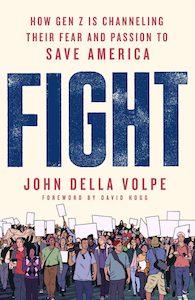
Despite the popularity of “OK Boomer” memes, it appears at long last that us Boomers are no longer the generation most responsible for that gigantic shit show 2022 represents. Nope. The worm has turned. It’s those lousy Gen X and Millennial slackers are the ones to blame. If things are to improve, it is up to those stalwart Gen Z warriors to save the day.
Should they have to? Should any generation bear responsibility for leaving the world in better condition than they inherited it? And is “saving America” really the most important problem facing the world anyway?
Then there is this trenchant insight.
The oldest Zoomers…are old enough to have voted for or against Donald Trump in two presidential elections.
Della Volpe, LitHub, 1/20/22
Golly. They are beginning to vote! That changes everything!
Sure, the majority of this cohort voted against the most abjectly unfit candidate this nation has ever seen. Gen Zers are on the whole more progressive than not, but not monolithically so; this is standard for any so-called “youth cohort” going back at least to the 60s. The “youth of today” is always going to upend the gameboard within the next election or three, you just wait. It just never seems to come about, and soon enough your GenTM is the target of the next generation’s ire and resentment.
The other Gen Zers, fully on board with marching authoritarianism, are not going away; if history is guide, their number will swell over time as the betrayals of becoming an adult under resoundingly inhumane social arrangements take their toll. As to the presumed permanence of Gen Z progressivism, I point to the legions of my cohort who peddled Revolutionary Worker tracts in the late-70s-early 80s, who marched against nuclear proliferation and the extremes of the criminal Reagan administration, and who are now as likely to be MAGAbots as anything.
The old Churchillian canardNot really one of Winstons’s bon mots, but rather that of an obscure 19th century French academic, Anselme Polycarpe Batbie. of ‘If You Are Not a Liberal When You Are Young, You Have No Heart, and If You Are Not a Conservative When Old, You Have No Brain’ is oft wielded, typically by those wishing to justify abandoning the generosity of their youth in favor of blinkered self-interest. People in this society tend to grow more conservative as they get older. This is not inevitable to human nature; more likely it is a process of fear and retrenchment as time plods on and the hopefulness of youth gives way to the crushing reality of surviving late-stage capitalism.
No matter where one finds oneself on the trajectory of time’s arrow, there is and always has been a generation gap and two extremese of attitude towards the younger generation. It’s either “damn kids these days” or “the kids are alright”. My own view is that the young upstarts are damned fine, as fine a group of humans as you could ever hope to meet. At the same time, I recognize that a huge percentage of Gen Z is damaged, tormented, filled with self-doubt/loathing as many of my time were, with a considerable portion of rabid authoritarians, fascists, and neo-Nazis. In other words, not at all different now than any time since the U.S. became an imperial power.
Plus ça change, plus c’est la même chose.
From the agonies of the Depression and the sacrifices of WWII, to the soul-crushing conformity of the post-war era and the social upheavals of the 60s and 70s. From the specter of nuclear holocaust to the resurgence of purely corporatist governance around the globe, environmental decline, climate change, and so on. Feudal serfdom, Black Death, Christian Crusades and Inquisitions, rampant disease, starvation, gruesome wars, &c. Things have been Fucked Up and Shit (FUASTM) for as far back as we can see.
But it seems that every generation must see their own struggles as sui generis, as somehow worse than it ever has been before in the history of forever. In this, they are correct. And also wrong and missing the point.
The struggle has been real for as long as time is recorded.
History is a catalog of FUASTM, with a broad exemption for the select few throughout history who lord it over the masses. The ability of the select to maintain their status has always rested upon an arsenal of carrots, carefully bestowed to instill ambition among the lessers, and sticks, indiscriminately wielded to instill fear among same. But the greatest weapon the top dogs have is the ability to create divisions among the mass of people whose core interests diverge sharply from the swells and overlap almost completely with each other. Dividing the underclass into subsets, and then turning them one upon the other, loads the hard work of maintaining an empire on those upon whom the empire lies heavy.
Check the subtitle of that LitHub article. “John Della Volpe Wonders If Demography Can Save Democracy” is a forehead slapper typical of the genre.
No. The answer is no. Just. Fucking. No.
Demography has no agency, no collective will. It is mere counting and sorting, a chimera propped up by statistical and anecdotal evidence of questionable utility. But sure, let’s set an impossible expectation and divert the polity from recognizing that, if democracy is to be saved, it will require a epic display of communitarian effort and solidarity across all ages, genders, races, and classes. “Let those kids handle it” won’t cut it, just like we can’t count on Black women to save us, or The Squad, or Bernie, or or or….It is up to all of us.
Generational definitions are manipulations, several among many that get repeated enough to become ‘common sense’. These flatteries, designed to appeal to base emotion, are fundamentally tools for moving widgets. But they also serve a more pernicious purpose as part of the rampant flattening of citizenship and community.
Too many of us appear desperate to be told who and what we are, eager to accept the kind of labeling nonsense that the GenTM hucksters serve up in shiny packaging. But we also see it elsewhere: in party affiliation or devotion to one or another sportsball (game or team). In our identification with one religion over another, and the antagonisms that arise even (especially) when the differences are so slight. Vax and anti-vax. Regional identification and prejudice. Stones or Beatles. Paul or John? There is not end; the quark will never be found.
The impulse to belong to one tribe or another may be the most dangerous infection we face today, and unlike COVID there is no vaccine. The slice and dice machinery is uncanny in its ability to ferret out fissures. It makes us all less appreciative of both the individual differences that make each member of any tribe unique, but to the actual, meaningful commonalities we share within and without our alleged tribe. This reliance on conferred identity flattens, makes us numbingly similar under the guise of superficial difference. And comfortable in our received identity, we begin to see significant cultural variations as threats to be defended against. And here lies the real danger, as fear turns to aggression and of fantasies of dominance and purity.
Writer Ted Gioia is best known for his music criticism and histories. (His Music: A Subversive History is a real banger for anyone interested in the social. Highly recommended.) But on his blog, The Honest Broker, he often branches off into other realms. Today, as I was struggling to wrap this essay, he published a piece about philosopher Byung-Chul Han that included this observation:
“It was once fashionable to opt out from the groupthink and reconstruct your own life in a free-spirited or even openly dissident way. But the groups and power brokers have gotten less tolerant of dissent nowadays, and it’s harder to find a space for self-invention outside their purview.”
Ted Gioia, The Honest Broker, 1/24/22
I cannot fully agree. The ‘groups and power brokers’ have never been particularly fond of self-invention beyond narrowly prescribed guardrails. Self-invention and self-realization are threats to the prevailing order, and the machinery in place to set the seal on bland conformity is relentlessly efficient. And pretty much anything that feels transgressive in one generation (long hair, tattoos, rainbow hair coloring, clothes made of U.S. flags) will be quickly flattened into yet another commodity that trades its signification as rebellion for that of consumer obediance.
At root, this is my objection to the GenTM industry’s role in a broader campaign to determine who we are so we don’t have to put in the effort. It is a mechanism of the Great Flattening machine – an array of large and small instruments ranging across political parties, bread and circus sport extravaganzas, music streaming algorithms, blockbuster movie hegemony, Wordle, TikTok influencers, &c. – that aims to turn us into reliable and docile consumer drones.
When we all do and like the same things, this slouching beast declares, we will all be happy.
Then we can all fall in line for authoritarian rule, because at least the trains will run on time while we all watch the Super Marvel Universe Bowl together.
_________________________________________
DISCLOSURE: If you click on a book recommendation here it will take you to the Indiebound website where you can purchase the book from your favorite independent bookseller. I2B will get a slim cut of the action if you buy when you click over from this site, and it is better for the author and the bookstore, too. And it’s way better than sending your money to Bezos.

 Hurricane Clarice – Allison de Groot and Tatiana Hargreaves, Free Dirt Records
  Only The Killer Would Know – Valorie Miller, Blackbird Record Label / Indie AM Gold
 FIVE MINUTES for Earth – Yolanda Kondonassis, Azica Records