Ears Embiggened: Rhiannon Giddens – Great Black Music, Redux

(The third in a series of preview posts as we count down to the
2019 Big Ears Festival in Knoxville, TN. Part 1 here on the 50 year legacy of ECM Records. Part 2 here on 50 years of the Art Ensemble of Chicago,

Great Black Music: Ancient to the Future.)

The eruption of way too many old photos of white politicians in blackface was a real chef’s kiss for Black History Month. There quickly followed predictable hand wringing, assertions of surprise that such a thing was actually still a thing, and heartfelt intonations that such evidence “does not reflect who I am within my heart,” a heart that surely resides in a body that contains not a single “racial bone.”

Blackface has a long history, back at least as far as Shakespeare’s Otello. More pertinent to the American experience is its introduction in the mid-1700s as a device to shorthand stereotypes about happy-go-lucky slaves and indolent and shiftless darkies. It was in the 1830s when Thomas Rice introduced the character of Jim Crow and the practice of whites capering in blackface – minstrelsy – became one of the most popular entertainment tropes in America and, often, in Europe.

Many of the songs were stolen wholesale from slaves and free Blacks and their wide popularity was tied to a significant act of erasure: White performers replaced Blacks as they purported to accurately represent the hijacked culture. See also, Dixieland, rock’n’roll, British blues, &c. These acts of cultural theft are well known.

The reality was different. While the overt acts of theft<fn>e.g., Elvis as the King, or the claim inherent in the name of the Original Dixieland Jass Band, an all-White ensemble that achieved notable popularity c. 1917-1935)</fn> are well-documented, the organic syncretism on the ground was the result of a more fluid commingling of whites and blacks, especially in rural and mountain communities.

A little less well-known is the centrality of African-American influence on musics that are widely regarded as “white” music: bluegrass and country. Much of this is an outgrowth of the sorting imposed by the recording industry in its early years and the separation of race music and old timey/country, which was allegedly the province of white folks. Jazz and blues were deemed to have slave and African roots, while country and mountain music was declared an offshoot of the Scots-Irish tradition, distinctly white. The markets for these now-sorted musics was presumed to be distinct, as well, though the reality of how music lovers seek out and collect music made these false distinctions somewhat irrelevant as American music developed.Categories are for sheep. Maybe that should be the Big Ears motto.

One of the most successful erasures in American music history lies in the revisionism that eventually decreed the banjo as the whitest instrument of them all, despite the fact that the banjer, or banza, came to America from Africa via slave ship, an unintended import, perhaps, carried in memory by the more intentional human cargo. The banjo, an instrument imported from Africa and subsequently employed to confer authenticity on the performers pretending to be black, was ultimately stripped of its African identity.

For at least the past 15 or 20 years, there has been a concerted effort at re-framing the banjo and its associated musics in a more explicitly African-American context. One of the most successful of the musical archaeologist/apostles is Rhiannon Giddens, formerly of the Carolina Chocolate Drops, MacArthur “genius” recipient, trained operatic singer, and banjo wizard.

Aside from the sheer pleasure of her singing and playing, Giddens’ work is a concerted campaign to undo multiple acts of erasure that have decentered African-Americans from a central component of their cultural legacy. Everything about her career asks us to reconsider the “facts” we all know are true. Things like “banjos and opera are for white folks.Among her many projects, Giddens hosts a podcast series called Aria Code that examines one great operatic aria per episode, with a variety of surprising guests. Her interests are broad.

In my last piece, I related how the Art Ensemble of Chicago rejected the jazz label and christened their genre Great Black Music: Ancient to the Future. It was a strategy that gave them access to the universe of musics that derive from the Black experience, which in practicality means just about any sound or style they found interesting. Unlike some acts of illegitimate appropriation (minstrelsy, Led Zeppelin, etc.), their claims represent a re-appropriation of something rightfully their own.

A survey of Rhiannon Giddens’ career reveals a similar strategy. She may never have thought of herself as part of the Great Black Music: Ancient to the Future orbit, but to listen to the breadth of musics she has (re)claimed, it is hard for me not to put her under that banner. Just take a listen to her latest release on Smithsonian Records, Songs of Our Native Daughters. Her and her three partners in this project (all WoC who play the banjo, by damn) mine their various traditions – both direct and inferred – to create a journey that is a model of intersectional storytelling.

Give a listen to “Barbados.” The wordless melody is every bit as harrowing as Blind Willie Johnson’s “Dark Was the Night, Cold Was the Ground.” But bracketing the lament is a polite recitation that slyly suggests: “So relax, my friend – we’re not all complicit.”

Buy this album. You will not be sorry.

In its own way, her embrace of the banjo and her ongoing musical archaeology are acts of cultural radicalism that have rippled out in ways she likely never imagined when she first hooked up with her eventual Chocolate Drop partners. It is a body of work that rejects and resists the acts of erasure and othering that underlie the greatest rifts in our culture.

And one of her most substantial acts of creative radicalism will be on display at the 2019 Big Ears Festival.

This machine kills fascists

In 2012, poet Caroline Randall Williams traveled to England to pursue a hot tip about Shakespeare’s sonnets, specifically numbers 127 to 154.

These sonnets have been called the “Dark Lady” sonnets for quite a while now, because of their focus (in contrast to the preceding 126, which are addressed to “a fair youth” and a “rival poet”) on a woman who consistently figures as “dark” or “black,” in his descriptions of her.

p. 8, Lucy Negro Redux: The Bard, A Book, and ! Ballet, Caroline Randall Williams, Third Man Books, 2019

Inspired by this research, Williams spun out a book of poems, Lucy Negro, Redux, informed by her experience as a Black woman and her identification with a woman who (may have) been like her, an unexpected identification with a central character in a canon of work that she loved deeply. The idea of William Shakespeare devoting a substantial portion of his work to Black Luce – a well-documented brothel owner in Shakespeare’s London – generated both disquiet (Luce likely being a madam and/or prostitute, sparking parallels with the exploited Black bodies of slave women) and elation (the possibility of placing a Black body at the center of the ne plus ultra of the White European literary tradition). As the NY Times review of the ballet premiere points out:

Caroline Randall Williams also descends from white men who raped her black ancestors. She carries in her very DNA the conflict at the heart of “Lucy Negro, Redux”: What does it mean for a woman to be both desired and reviled for the color of her skin?”

It is one hell of a volume. The poems are gorgeous, angry, sexual, repellent, yearning. They are explicit and blunt and irresistibly musical. Her use of space on the page enhances this notion of rhythm and musicality. And their intensity made it difficult for me to read more than a couple at a time. Some are stark revenge fantasy; others are demands to be seen or a fight against the ever-looming threat of erasure. Others are pained cries of yearning, of a wish to be loved for and as herself. Shakespeare as a deep blues. Or maybe the other way round.

The Nashville Ballet’s artistic director, Paul Vesterling, read it and knew he wanted to stage the work. He had just the dancer in mind for the role of Lucy: Kayla Rowser, a Nashville Ballet company member who had been named one of Dance Magazine’s Top 25 to watch.

Naturally, a ballet needs music. And that’s where Rhiannon Giddens comes back in. Vesterling asked Giddens to create the soundscape. She collaborated with Francesco Turrisi to compose a score that they perform live for the ballet. (They will also appear in concert at Big Ears, separate from the Lucy Negro, Redux presentation, as they explore commonalities between American, Celtic, and Islamic musical traditions. World music, y’all.)

Lucy Negro, Redux, a ballet, is an assertive act of resistance against multivalent forces of erasure and false sorting. Imagine the stage. Giddens as a visual and sonic focus. Williams herself appearing as narrator and centering presence, her words and body claiming her place alongside ole Billy Bard. Kayla Rowser establishing the presence of Black Luce, her story retold through the imagination of Williams, the movements of Rowser, and the music of Giddens. It makes me shiver.

The programming at Big Ears encourages broader connection-drawing, grand schemes that dig for the meaning of life, the universe, and everything. Aside from the convergence of the 50th anniversaries of ECM and the Art Ensemble of Chicago – an obvious bit of harmonic convergence – there are the broader questions of how the programming might encourage us to ponder broader implications of how the music (and film and dance &c.) we enjoy might direct us to finer considerations of the ways we all – all of us – might connect one to the other in the broader scheme of things.

Is Rhiannon Giddens really an expositor of Great Black Music: Ancient to the Future? Honestly, chances are good she would laugh in my face at the idea. But it seems to fit, in the same way that her work and the work of the AEC fit hand in glove with the admonitions of James Baldwin to open our eyes and ears and hearts, to make them bigger and more able to see and hear and feel a deep and rich history that has been largely hidden from us, one that could have disappeared entirely without the efforts of the artists and scholars who insist on keeping it alive. It is work that asks us to enlarge our vision to embrace the vast and wondrous possibilities that await, if only we could overcome the limitations imposed upon us by a social and economic system that profits by our ignorance and separation.

“And if the word integration means anything, this is what it means: that we, with love, shall force our brothers to see themselves as they are, to cease fleeing from reality and begin to change it. For this is your home, my friend, do not be driven from it; great men have done great things here, and will again, and we can make America what America must become.”

“The Fire Next Time,” James Baldwin

Maybe the whole idea of “art” somehow being a reasonably accurate and/or useful reflection of our shared human condition – and by extension, the possibility that “art” might somehow manifest something like a healing action or force upon our beleaguered condition – is somehow valid, somehow pertinent to our hourly/daily/weekly efforts to figure out the answer to what David Foster Wallace called our essential existential question: What does it mean to be fucking human?



America’s Virgil

At this point, just about everyone has at least heard of Ta-Nehisi Coates. His second book, Between the World and Me, won the 2015 National Book Award. Written as a letter to his teen-aged son, BTWAM has sold 1.5 million copies in 19 languages. He won a MacArthur “genius” award. His writing drew comparison to James Baldwin from no less a voice on high than Toni Morrison. He was anointed with dreadful millstone descriptions like “voice of a generation” or, even worse, “the conscience of his race”.

Now comes the follow-up, and it’s shaping up to be quite the media event. The reviews have been almost embrassingly laudatory and hagiographic profiles of Coates are popping up everywhere. The man himself has been making the rounds of all the high-profile venues. Just last night he sat down with Colbert.

So the burning question. Is We Were Eight Years in Power worthy of the fuss?

Yeah, you better believe it is.

It would have been easy to just package a bunch of his Atlantic essays, slap an introduction up front, and call it a day. It likely would have been every bit as commercially successful as the more considered volume that hits the store shelves today will be. We Were Eight Years in Power collects those essays – one from each of the past 8 years – but instead of one big retrospective introduction, Coates has written an introduction to each essay, a sort of mini-essay on where he stood professionally and philosophically at the time. Running in parallel to the uber-phenomenon of the first black presidency is the micro-story of a college dropout from Baltimore coming to grips with his voice, his thinking, his place in the world, and eventually, his blazing rocket ascension into his role “as one of the most influential black intellectuals of his generation”, as the NY Times recently put it. And then, to cap it all off, Coates offers a new meditation on the rise of the inexcusable Trump, “The First White President”, that kicks the hornet’s nest anew.

Here’s how I’d put it: Coates is shaping up to be America’s Virgil, the man of letters who will serve as our guide through the circles of hell built on the foundation of white supremacy, theft, murder, rape, and lying.

Lasciate ogne speranza, voi ch’intrate. So let’s take a walk, shall we?

The essays alone, arranged chronologically and ranging from his look at the stern moralizing of a pre-disgrace Bill Cosby to the nightmare rise of a dim-witted game show host to the Oval Office, give the reader a tour through a young man’s mind as he comes to better know himself, his craft, and the world around. But even better: the new essays give us a matured writer in conversation with his younger self, chastising the flaws and failures and giving us a glimpse of struggles that should resonate with any writer.

One of the great pleasures in this volume lies in witnessing Coates’ gradual, and then sudden, development.<fn>2015 alone saw the publication of BTWAM and his Polk award winning essay “The Black Family in the Age of Incarceration”, included here. Talk about mic-dropping.</fn> It’s as though he gains confidence both in his voice and his thinking in tandem. I wish he had included some examples of his early-years blogging at The Atlantic to paint an even fuller picture of how far he traveled in a ten year span. The blog is where I first stumbled to Coates, and I followed him regularly. He writes about that period, describing it as something of a finishing school, a place where he was able to try out ideas and voices, a place where the give and take of argumentation and citations of previously-unknown writers led him into modes of thought and investigation that were fresh and generative. It was clear that this was a guy with chops, and I remember wondering why he didn’t have a two-a-week gig on the NYT op-ed. Even raw, he was that good.

Coates backs up his provocative positions with solid evidence, but nobody turns to Coates for a recitation of statistics. He is one of the finest prose stylists alive. Every page brings at least one passage – a phrase, a sentence, an entire paragraph – that demands multiple re-readings.

At one point early in his ascent, he describes attending a dinner party where someone mentioned the Continental Divide, something he had never heard of at the time.

I did not know what the Continental Divide was, and I did not ask. Later I felt bad about this. I knew, even then, that whenever I nodded along in ignorance, I lost an opportunity, betrayed the wonder in me by privileging the appearance of knowing over the work of finding out.

Raise your hand if you ever pretended to know when you didn’t.<fn>You there, in back, with your hand down. You’re pretending. That’s it. Raise that hand.</fn>

Coates writes at length about the influences that made him the writer he has become. He speaks frequently of his love of graphic novels<fn>Post-BTWAM, Coates became the writer for the Black Panther comic series, telling the NYT that it “satisfies the kid in me” and is “the place where I can go to do something that sort of feels private again.”</fn> and how he spent hours playing and replaying certain hip-hop tracks so he could decipher the lyrics, certain that there was a structure and rhythm that he might be able to unlock.

That was how I wanted to write – with weight and clarity, without sanctimony and homily. I could not even articulate why. I guess if forced I would have mumbled something about “truth.”

It’s easy to forget that just ten years ago, Coates was struggling to get his words out, struggling (and often failing) to provide for himself and his family. Struggling to find a voice. And grappling with the question of what, exactly, he needed to be writing about, when along comes a skinny guy mixed-race guy with a beautiful family and a very black name to upend the apple cart of assumptions about race. Coates was in the right place at the right time. And he had prepared for the moment, even if it would take a few years of hindsight to realize how fortune had smiled.

It’s not fair to say that Coates would not have “made it” absent the phenomenon of Obama. He is simply too talented and curious not to have arrived in some fashion. But just as the fact of Obama created the ground that enabled the ascendancy of Trump, so too did it provide a framework for Coates to both blossom and achieve success beyond his wildest imaginings. In “Notes from the Second Year”, which introduces his 2009 profile of Michelle Obama, he acknowledges this turn of fate.

Their very existence opened a market. It is important to say this, to say it in this ugly, inelegant way. It is important to remember the inconsequence of one’s talent and hard work and the incredible and unmatched sway of luck and fate.

Revisiting Coates’ work over the Eight Years in this volume reminds me of how much his work influences my own approach, and how surprisingly<fn>Though it shouldn’t be a surprise.</fn> similar we are to one another. Bookish nerds with a fierce love of music, backed by a certainty that these arts could change the world. Civil War geeks. Devoted family guys who, often, are tormented by a seeming inability to measure up to standards of toxic masculinity as regards our success as providers. And the tie that binds all of us who lash ourselves to pen and paper: the curiosity and fear and drive and futility of trying to transform thoughts into words that sing and dance off the page.

But even with the pleasures provided by Coates’ writing, this collection is unlikely to make you feel especially chipper. Beginning with the audacious hope that the Obama era confers, the story closes with Coates pondering the specter of America’s “first white president”, a man who has achieved the highest office in the land based solely on his appeal to whiteness. In electing Trump, he suggests, “the white tribe united in demonstration to say, “If a black man can be president, then any white man – no matter how fallen – can be president.”

The American tragedy now being wrought is larger than most imagine and will not end with Trump. In recent times, whiteness as an overt political tactic has been restrained by a kind of cordiality that held that its overt invocation would scare off “moderate” whites. This has proved to be only half-true at best. Trump’s legacy will be exposing the patina of decency for what it is and revealing just how much a demagogue can get away with. It does not take much to imagine another politician, wise in the ways of Washington, schooled in the methodology of governance, now liberated from the pretense of anti-racist civility, doing a much more effective job than Trump.

In recent interviews, Coates has taken something of an absolutist stance: the myth of race and the horrific reality of racism is the one key factor, “the only thing” that explains everything, as he said to Chris Hayes. I swing between believing this to be a rhetorical gambit –  a means of framing the debate on his terms, almost like a negotiating stance – and believing him to be quite sincere in this belief.

I’m not much for grand theories of everything, but he has a point. He poses compelling arguments that the United States, and everything about its financial strength and global power, is predicated on the violent appropriation of black peoples’ labor, under slavery and under both the original and new Jim Crow. He is at his most forceful when he challenges America to face its original sin, to acknowledge the “bloody heirloom”. And he is at his most resigned when he avers that a snowball stands a better chance in hell.

It’s not that Coates does not offer or hold out hope for our future. In essence, the hope lies in his demand that we acknowledge our true history, unadorned by myths of exceptionalism and bootstrappy pluck and all the other fairy tales the nation has told itself over the years.

Like Baldwin (and so many others before and since), he despairs that he will ever see such a turn of fate. Yet he manages a quiet note of hope. He quotes Baldwin:

White people in this country will have quite enough to do in learning how to accept and love themselves and each other, and when they have achieved this – which will not be tomorrow and may very well be never – the Negro problem will no longer exist, for it will no longer be needed.

The “race problem” lies in America’s enthusiastic embrace of the falsity and myths of exceptionalism and of “authentic” (read: White) American working men and women raising themselves through dint of their own merit and pluck. That this formulation rests on a false notion of Whiteness that can only exist in juxtaposition to a fabricated myth of Blackness is the unspoken dirty secret that keeps us all on blindly flailing on side-by-side treadmills, hurtling toward an illusory destination while making scant progress and never noticing that the rats in the cage next to us are really more like us than we have been led to believe.

For Coates, white supremacy is so foundational to the entire American enterprise that he sees little chance of White America writ large rejecting the premise. It’s hard to argue with him, even as it leaves one in despair. In his sit-down with Colbert, he was asked to offer hope for a better tomorrow. Coates was having none of it.

COLBERT: I’m not asking you to make shit up. I’m asking if you personally see any evidence for change in America.

COATES: But I would have to make shit up to actually answer that question in a satisfying way.

So don’t look to We Were Eight Years in Power for a pleasing bedtime tale. Coates offers analysis, not bromides. Or as he puts it in what his perhaps the most Baldwin-esque passage in the book:

Art was not an after-school special. Art was not motivational speaking. Art was not sentimental. It had no responsibility to be hopeful or optimistic or make anyone feel better about the world. It must reflect the world in all it brutality and beauty, not in hopes of changing it but in the mean and selfish desire to not be enrolled in its lies, to not be coopted by the television dreams, to not ignore the great crimes all around us.


Days of Miracle and Wonder

One of the activities that keeps me off the street and out of trouble is serving as a mentor to up and coming entrepreneurs at the Domi Station incubator in Tallahassee. This is purely volunteer work where I listen to people pitch their ideas and then tell them a million ways they could do it better. Most people appreciate it; some, not so much. Either way, this was their chance to throw rocks my way.

The 1 Million Cups series is a Kauffman Foundation initiative based on the notion that entrepreneurs discover solutions and create networks over a million cups of coffee. Every Wednesday, in dozens of cities, one person stands up and throws a pitch to a crowd of caffeine-fueled colleagues, peers, and the occasional VIP. Today was my turn on the mound.

Your Narrator delivered a scintillating, finely woven tale, peppered with witty asides and penetrating insights. Jaws dropped. Grown men wept. In the distance, a coyote howled. It was amazing. No, really.

But you readers have to make do with the short version. Basically, I was asking for financial support to chase down an amazing story. Essentially, to chase a miracle.

There are several strands at play, like Southern agricultural economics and the role of the peanut in the politics of social justice, largely centered around this man’s story.

George Washington Carver

It’s a story about how African-American farmers, instructed by an African-American researcher, upended the cotton-based economics of the agrarian South by embracing the humble peanut at the beginning of the last century. It’s about how that switch regenerated the soil depleted by cotton (an extremely extractive crop that turns soil to dust) and offered a pathway to self-reliance to people who were still toiling under a de facto continuation of slavery. It’s about the discovery of the superb nutritional qualities of the ground nut, the lowly goober pea, which eventually found its way onto everyone’s pantry shelf in the form of peanut butter and other products, not to mention taking a central place in African-American foodways traditions.

It’s also about a small town, Fitzgerald Georgia, population 9053, a long-time peanut center, which has a new factory for peanut processing that employs around 80-90 people. And how most of the employees are convicted felons searching for a pathway back into mainstream life.

But more than anything, it’s about this little guy.

little-guy

This child is in the final stages of Severe Acute Malnutrition (SAM), the leading cause of death of children in the world. One every 8 seconds, around 5 million deaths per year. The kids who survive are typically developmentally challenged – saddled with poor motor, cognitive, immune functions – for the rest of their lives. Entire generations of future problem solvers, leaders, entrepreneurs, doctors, &c., are left hollowed out. There are many reasons that sub-Saharan Africa is plagued by social and political crisis. This is one of the chief contributing factors.

The worst thing about it…this suffering is easily preventable. Absolutely curable and reversible.

This is the miracle part. And we’re back to the peanut.

Miracle and wonder
Miracle and wonder

The boy on the right is the boy on the left after five weeks of treatment with Ready to Use Therapeutic Food (RUTF), a high-protein, vitamin-fortified peanut paste. At a cost of a little more than a dollar a day, RUTF will reverse the symptoms of SAM and place a young child on a path to normal physical and mental development. The treatment efficacy is in the 95% range. Miracle and wonder.

There are a handful of companies in the world that make this stuff according to a formula prescribed by the UN. One of them is in Fitzgerald, GA, population 9053.

Miracle Nutrition
Miracle Nutrition

Mana is a non-profit that is committed to eliminating SAM. It also takes seriously an opportunity to provide stimulus to an economically suffering part of rural South Georgia, and to provide job opportunities for ex-cons looking for reintegration.

It’s a big job, and like most important missions, it is underfunded. Mana reaches around one-third of the kids in need. Upping that figure takes money. (One of the stories that I dread, and that is inevitable, is how just a few miles from where we distribute Mana is another camp that will not be served.)

So they had a bright idea: create a for-profit company that leverages the existing peanut processing facility to manufacture a high-quality consumer product that can fund the famine relief mission.

Funding the Miracle
Funding the Miracle

So Good Spread was born, an effort to harness a chunk of the $2Billion/year peanut butter industry in service to a larger good. We hear an awful lot about Social Entrepreneurship these days, and when it’s touted by the oil companies and such, it’s easy to get cynical. But these folks are the real deal.

Next month, October, Mana/Good Spread is loading up a plane for delivery to Uganda, which recently received around 750,000 refugees from the civil strife in South Sudan. This is on top of a multi-year drought and crop failure cycle that has already stressed the Ugandan food infrastructure to the breaking point. Not to mention an earlier influx of refugees. The situation is dire.

And Your Narrator has been offered a seat on the plane and in the back of the truck. This will mean 8-10 days on the ground in Uganda, sitting in on meetings with governmental and NGO actors, and visiting the camps and relief agencies. What I’ve related so far is the tip of the iceberg on this story. I want to dig deeper and bring this story home. There is already interest from a few publications, and my pitch this morning has led to potential contacts at some other notable vehicles. My gut instinct is that this story has potential for full book length treatment. It is that big.

But this project will take money, way more than I have. I’ll need travel expenses to Africa, as well as resources to pursue story lines in Fitzgerald, Tuskeegee, and other significant locations.

So I’m asking straight out: please donate to this project. We are not going the Kickstarter/GoFundMe route, or directly to granting orgs and foundations, because the trip is coming up so quickly. Direct action, and pleading, is necessary. We are setting up a donation channel through the Domi Education Fund, which will make your contribute tax-deductible. I’m putting up a PayPal link at the top of this page. Please use it. Tell your friends. If you know any philanthropists, tell them.

IMPORTANT: (UPDATED)
The PayPal link leads to a donation form where you can place a tax-deductible donation to Domi Education, which is administering the funds.
If you prefer to donate via check, please remit to:

Domi Education
914 Railroad Ave
Tallahassee, FL 32310.

I need to raise about $4000 to put me on that plane (and the one that comes back!), and around $5000-6000 beyond that to cover research expenses and development. If I get anywhere close to $4k, I’m on the plane and I’ll worry about the rest later. Any donations beyond those amounts will go to Mana.

And if you want to skip my project and just give directly to Mana, angels will smile and blow trumpets. I’m good with that. Do whatever feels right.

But since I really want to bring this story home, I’m turning to my network of faithful readers and pals to do the one thing I do worst: ask for help.

Whaddya say?

brother


The Greatest Thing That Ever Lived

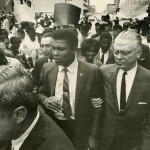
By the time I could pay attention, The Greatest had already rejected his slave name, embraced the Nation of Islam, and refused to serve the armed forces of the United States.<fn>He was not a draft dodger. He just said fuck no, put me in prison if you have to, but fuck. No. That ain’t no dodge.</fn>

By the time I could pay attention, I remember adults in my orbit still calling him Cassius Clay, declaring they would never call him by that n****r name, that he had gotten way above his station, that he was a traitor, that he refused to appreciate everything “his” country had done for him, just another shiftless ingrate who didn’t know his place.

I can’t say I was carefully taught. But I was taught. I was taught that James Brown was barely more evolved than an ape or a gorilla, that MLK was one “one of the good ones, mostly” and that those animals were burning down “their own” neighborhoods.

But by the time I could pay attention, none of this stuff squared with what I was seeing with my own lying eyes.

By the time I could pay attention, MLK went from alive to dead, a victim of the racism that my people all wanted to believe was not as bad as “the bad ones” would suggest. You know, the bad ones. Like these guys.

Tommie Smith and John Carlos -- American Patriots
Tommie Smith and John Carlos — American Patriots

By the time I could pay attention, James Brown was the guy who made some of my favorite music, a thrilling force of nature.

By the time I could pay attention, the futility and inherently racist cruelty of the Vietnam War was all too clear, even to this ten-year old. A 4th grade friend and I got in big trouble for refusing to stand and recite the Pledge of Allegiance, reasoning that there was no way in hell that we would ever fight in Vietnam, so pledging allegiance would be nothing but a lie.

We stood with Muhammad Ali. Even if we didn’t know it.

(That week, in an odd turn, Jose Feliciano performed the National Anthem at the World Series. His performance was an outrage, a provocation, yet another example of one of Those PeopleTM showing ingratitude at how much “their” country had done for them. His crime? Singing a British drinking song with a Latin feel. So the next day, the entire 4th grade was summoned to the classroom of one Miss Loretta Karp, a stooped skeleton from hell in high heels, with impossibly bright red hair, a woman who would have been six foot three if she was not in a constant hunch. She was mean as a wet cat whose bright red lipsticked smile existed only to signal impending cruelty. She began by noting that there had been some “unpleasantness” in school lately with “certain people” showing “poor patriotism by refusing to honor Our Flag”. She then went on to note that the World Series had been forever blemished by the desecration of the national anthem by a “foreigner. But by God,” we were going to fix that by having the entire 4th grade “stand together and sing the Star Spangled Banner as God meant it to be sung”. My pal and I got the giggles and could not stop. We got in trouble again. Such wabble wousers!)

Sure, we were risking nothing more than a stern talking to from our parents and disapproving looks from teachers and staff. Our courage was nothing, a flea fart in a hurricane. But still. We stood with Ali, two dopy white boys in the Connecticut suburbs who basically knew shit from shinola. But we knew that everything we were being taught about the war, about the way our nation was structured, did not square with things we saw on the electric radio picture box every night at dinner, pass the biscuits please. By the way, why are they burning down that village?

Too many things we were taught were just transparently wrong. This is not to cast full blame on our parents and teachers. They were themselves taught untruth, a set of lies that became matters of gospel faith. This was “their” country, and everyone else who was here needed to know their place.

So it’s easy to understand how my people, taught from birth that this was “their” country, would look at Cassius Clay’s declaration of “I’m the greatest thing that ever lived!” as not just braggadocio, but as a direct threat to their security and world view. For a colored man, such a thing was just not done.

And for him to embrace Black Nationalism the very next day, to clearly state uncomfortable truths about “their” nation, could only mean one of two things: one of them was lying. And it had to be, just had to be, that loud-mouthed boy.

And then, he rejected “their” war, “their” draft, “their” nation in terms that offered no comfort, no conciliation:

“I got nothing against no Viet Cong. No Vietnamese ever called me a nigger. They never lynched me or raped my grandmother. Why should they ask me to put on a uniform and go 10,000 miles from home and drop bombs and bullets on Brown people in Vietnam while so-called Negro people in Louisville are treated like dogs and denied simple human rights? No I’m not going 10,000 miles from home to help murder and burn another poor nation simply to continue the domination of white slave masters of the darker people the world over. This is the day when such evils must come to an end. I have been warned that to take such a stand would cost me millions of dollars. But I have said it once and I will say it again. The real enemy of my people is here. I will not disgrace my religion, my people or myself by becoming a tool to enslave those who are fighting for their own justice, freedom and equality.… If I thought the war was going to bring freedom and equality to 22 million of my people they wouldn’t have to draft me, I’d join tomorrow. I have nothing to lose by standing up for my beliefs. So I’ll go to jail, so what? We’ve been in jail for 400 years.”

He gave up everything for this stand. His titles, his income. He was not allowed to practice his craft. He was, in fact, one of White America’s most hated symbols, even as he became a hero to Black America and to people around the world. When he was finally allowed to fight again, the battle lines were pretty clear. Joe Frazier was “one of the good ones”, the guy who would shut Ali up for good. The rest is, as they say, history. You can look it up.<fn>Or you can turn on the electric picture radio machine for round the clock Ali hagiography.</fn>

As with MLK III, the posthumous softening of the Ali image is underway. Just as King was transformed from a warrior badass into a cuddly teddy bear of non-violent accommodation, Ali is being morphed into an anodyne citizen of the world, a guy who was great with kids, who met with everyone from princes to paupers. A twinkly-eyed elder statesman who, robbed of speech, became a blank slate upon which we could all shine our imagining of who and what this guy was in life.<fn>Even Trump blathered on about how they were such “good friends”, ffs.</fn>

But Ali, like King, was way more than a teddy bear.

Last night we began watching the remake of Roots. It’s a grueling affair. Central to the first episode is the importance of a person claiming and owning his real name. Kunta Kinte endured a savage beating before he whispered “Toby” in acceptance of his fate. Ali flipped that, renouncing the name his more recent ancestors had been forced to assume. And he took a beating for it. The nation wanted a nice Joe Louis Negro, a quiescent and accommodating character who would make white folks feel like they are not racists, because they just love them one of the good ones. Someone who transcended race.

Writer Stereo Williams dropped this tweet today:

“Transcended race” typically means “Helped me forget to be racist.”

Ali never let me forget to be racist. Such a thing is impossible for this product of White Southern upbringing. If anything, I want to remember that I am a racist, constantly. I don’t need to be let off the hook for my part in this legacy.

By the time I could pay attention, Ali helped me understand that the Vietnam War was an immoral, indefensible violation of human decency. That was early on in my lifetime of paying (variable) attention to our world, and it was no small thing to realize that one of Those PeopleTM  was correcting a lie handed me by “my people”.

What else did I have wrong? The list is seemingly endless.